
As a provider of Long Range IR Diodes, I often encounter inquiries from clients seeking to enhance the sensitivity of these crucial components. In this blog post, I'll share some effective strategies and insights based on my experience in the industry.
Understanding the Basics of Long Range IR Diodes
Before delving into ways to improve sensitivity, it's essential to understand how Long Range IR Diodes work. These diodes emit infrared light, which is invisible to the human eye but can be detected by specialized sensors. They are widely used in various applications, such as surveillance systems, night vision devices, and industrial automation.

The sensitivity of a Long Range IR Diode refers to its ability to detect weak infrared signals. A more sensitive diode can pick up fainter signals, allowing for better performance in low - light or long - range scenarios.

Optimizing the Diode Design
- Material Selection: The choice of semiconductor material plays a significant role in determining the sensitivity of the IR diode. High - quality materials with appropriate bandgaps can enhance the absorption and emission of infrared photons. For example, certain types of gallium arsenide (GaAs) - based materials are known for their excellent infrared properties. By carefully selecting the right material, we can improve the efficiency of photon conversion and thus increase the diode's sensitivity.
- Junction Design: The design of the p - n junction in the diode is crucial. A well - designed junction can reduce internal resistance and improve the flow of charge carriers. This can be achieved through techniques such as precise doping control. By optimizing the doping concentration and profile, we can minimize recombination losses and increase the number of carriers available for photon emission or detection.
Improving the Optical Path
- Lens Optimization: A well - designed lens can focus the infrared light emitted by the diode more effectively. This increases the intensity of the light at the target and improves the overall sensitivity. We can use aspherical lenses, which are designed to correct for spherical aberration and provide a more uniform and focused beam. Additionally, anti - reflective coatings on the lenses can reduce light loss due to reflection, further enhancing the efficiency of the optical system.
- Optical Coupling: Proper optical coupling between the diode and the external optical components is essential. Any misalignment or loss of light during the coupling process can reduce the sensitivity. We can use techniques such as fiber - optic coupling or direct coupling with precision - aligned components to ensure maximum light transfer from the diode to the target area.
Thermal Management
- Heat Dissipation: Long Range IR Diodes generate heat during operation, and excessive heat can degrade their performance and reduce sensitivity. Effective heat dissipation mechanisms are necessary to maintain the diode at an optimal operating temperature. We can use heat sinks, which are made of materials with high thermal conductivity, such as aluminum or copper. These heat sinks absorb the heat from the diode and transfer it to the surrounding environment.
- Thermal Isolation: In some cases, thermal isolation can also be beneficial. By isolating the diode from other heat - generating components in the system, we can prevent heat transfer that could affect its performance. This can be achieved through the use of thermal insulation materials or proper mechanical design.
Electronic Circuit Design
- Amplification: Incorporating a suitable amplifier circuit can significantly enhance the sensitivity of the IR diode. An amplifier can boost the weak electrical signals generated by the diode in response to infrared light. We need to carefully select an amplifier with low noise and high gain characteristics to ensure that the signal - to - noise ratio is maintained.
- Filtering: Electronic filters can be used to remove unwanted noise and interference from the signal. For example, a band - pass filter can be designed to allow only the frequencies corresponding to the infrared signals of interest to pass through. This helps in improving the signal quality and thus the sensitivity of the diode.
Testing and Calibration
- Regular Testing: Regularly testing the sensitivity of the Long Range IR Diodes is crucial to ensure consistent performance. We can use specialized testing equipment, such as infrared spectrometers and photodetectors, to measure the diode's response to different infrared wavelengths and intensities. By comparing the test results with the desired specifications, we can identify any issues and take corrective actions.
- Calibration: Calibration is an important step in optimizing the sensitivity. By adjusting the operating parameters of the diode, such as the bias voltage and current, based on the test results, we can fine - tune its performance. This ensures that the diode operates at its maximum sensitivity under different conditions.
Applications and Related Products
Long Range IR Diodes are used in a wide range of applications, and our company offers related products to meet different needs. For example, our Explosion - proof IR Laser Illuminator is designed for use in hazardous environments. It provides a high - intensity infrared beam with excellent long - range performance, making it suitable for surveillance in explosive areas.
Another product is our VCSEL IR Laser Diode. VCSEL (Vertical - Cavity Surface - Emitting Laser) technology offers several advantages, such as low power consumption, high efficiency, and good beam quality. These diodes are ideal for applications where high - sensitivity and reliable performance are required.

Conclusion
Improving the sensitivity of Long Range IR Diodes requires a comprehensive approach that involves optimizing the diode design, improving the optical path, managing thermal issues, designing appropriate electronic circuits, and conducting regular testing and calibration. By implementing these strategies, we can enhance the performance of our products and meet the diverse needs of our customers.
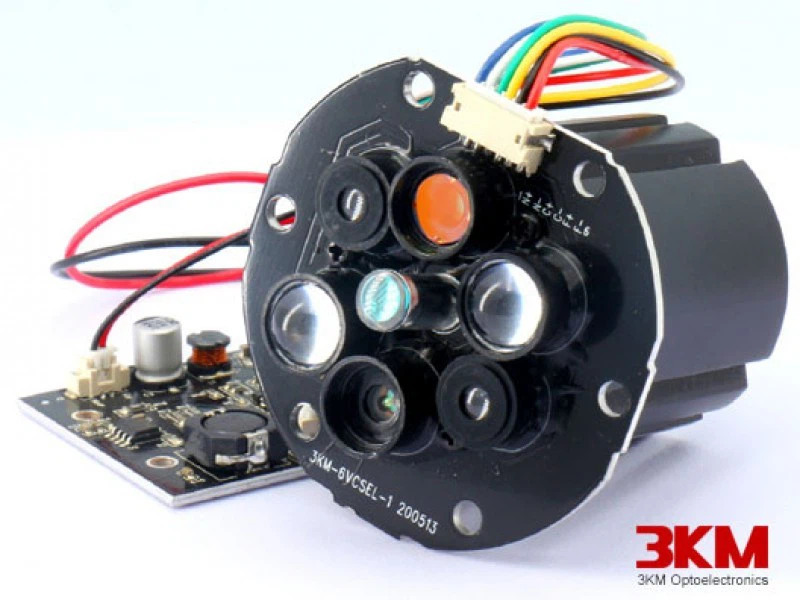
If you are interested in our Long Range IR Diodes or related products and would like to discuss your specific requirements, please feel free to contact us for procurement and further洽谈. We are committed to providing high - quality products and excellent customer service.
References
- Smith, J. (2018). Infrared Technology and Applications. Wiley.
- Jones, A. (2020). Semiconductor Device Physics for Infrared Diodes. Springer.