
As a seasoned provider of green laser illumination devices, I've witnessed the rapid evolution of this technology over the years. Green laser illumination has found applications in a wide array of fields, from wildlife management to industrial safety, and its potential continues to expand. In this blog post, I'll share some insights on how to upgrade green laser illumination devices, drawing on our company's experience and the latest industry trends.
Understanding the Basics of Green Laser Illumination
Before delving into the upgrade process, it's essential to understand the fundamental principles of green laser illumination. Green lasers are favored for their high visibility, particularly in low - light conditions. They emit light at a wavelength of around 532 nanometers, which is close to the peak sensitivity of the human eye. This makes them ideal for applications where the laser beam needs to be clearly visible, such as in aviation aids or bird repellent systems.
The performance of a green laser illumination device is primarily determined by three factors: power output, beam quality, and reliability. Upgrading these aspects can significantly enhance the device's functionality and effectiveness.
Upgrading Power Output
One of the most straightforward ways to upgrade a green laser illumination device is to increase its power output. Higher power lasers generate brighter and more visible beams, which can be beneficial for long - distance applications. However, increasing power also comes with several challenges.
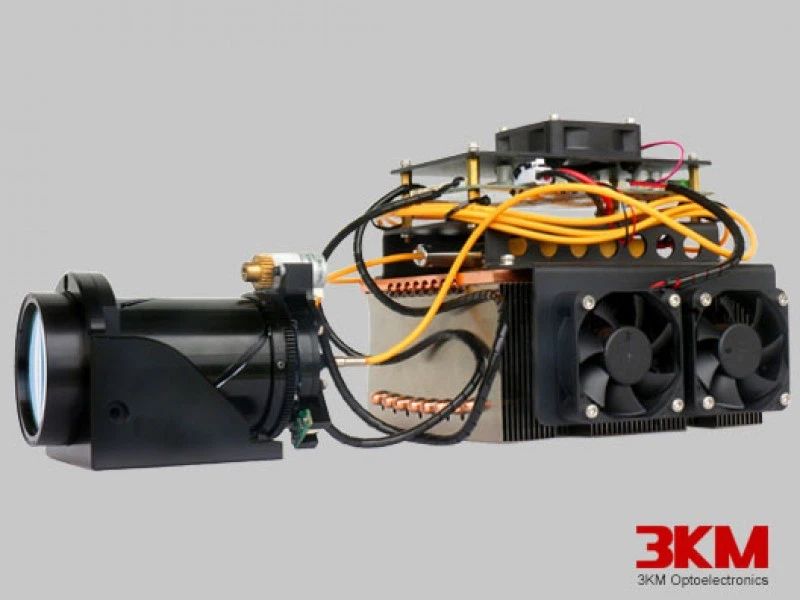
Firstly, higher power lasers generate more heat. Excessive heat can damage the internal components of the laser, leading to reduced performance and a shorter lifespan. To address this issue, we need to improve the cooling system. For example, we can upgrade from passive cooling methods, such as heatsinks, to active cooling solutions like fans or thermoelectric coolers (TECs). TECs are particularly effective as they can precisely control the temperature of the laser module, ensuring stable performance under various environmental conditions.
Secondly, increasing power requires a more robust power supply. A high - power laser demands a stable and reliable source of electricity. We can upgrade the power supply to a higher - capacity model with better voltage regulation. Additionally, implementing over - current and over - voltage protection circuits can prevent damage to the laser module due to power surges.
Improving Beam Quality
Beam quality is another crucial aspect of green laser illumination. A high - quality beam is characterized by a narrow divergence angle and a uniform intensity distribution. To upgrade the beam quality, we can focus on the following areas:
Optics Upgrade: The quality of the optical components in a laser device has a significant impact on the beam. Upgrading to higher - quality lenses and mirrors can reduce aberrations and improve the focus of the beam. For example, using aspherical lenses can correct spherical aberrations, resulting in a more tightly focused beam with a smaller spot size at a given distance.
Beam Shaping: Specialized beam - shaping optics can be used to modify the beam profile according to specific application requirements. For instance, in some industrial alignment applications, a line - shaped beam may be more useful than a circular beam. Beam - shaping techniques can convert a circular beam into a line or other desired shapes, enhancing the versatility of the laser illumination device.
Enhancing Reliability
Reliability is key, especially for green laser illumination devices used in critical applications such as aviation or security. There are several ways to enhance the reliability of these devices:
Component Selection: Choosing high - quality components is essential for ensuring long - term reliability. This includes selecting high - grade semiconductor lasers, durable optical components, and reliable electronic parts. We should also source components from reputable suppliers with a proven track record of quality.
Environmental Protection: Green laser illumination devices are often exposed to harsh environmental conditions, such as dust, moisture, and extreme temperatures. To protect the internal components, we can enclosure the device in a rugged and sealed housing. Additionally, applying protective coatings to the optical components can prevent damage from contaminants and corrosion.

Regular Maintenance and Monitoring: Implementing a regular maintenance schedule is crucial for detecting and addressing potential issues before they become major problems. This may involve cleaning the optical components, checking the integrity of the electrical connections, and calibrating the laser beam. Installing monitoring sensors can also help us keep track of key parameters such as temperature, power output, and beam alignment in real - time.
Leveraging Advanced Technologies
The field of laser technology is constantly evolving, and there are several advanced technologies that can be used to upgrade green laser illumination devices:
Frequency - Doubling Technology: Frequency - doubling is a common technique used in green lasers to convert infrared light into green light. Advancements in frequency - doubling crystals and related optics can improve the efficiency of this conversion process, resulting in higher power output and better beam quality.
Intelligent Control Systems: Incorporating intelligent control systems can enhance the functionality of green laser illumination devices. These systems can adjust the laser output based on environmental conditions, user requirements, or sensor feedback. For example, in a bird repellent system, the intelligent control system can automatically adjust the laser beam pattern and intensity according to the time of day and the presence of birds.
Case Studies: Upgraded Green Laser Illumination Devices
Let's take a look at two of our upgraded green laser illumination products that demonstrate the benefits of these upgrade strategies:
- Desert - Spec Solar Laser Beacon System: This system is designed for use in desert environments. We upgraded the power output of the laser by implementing a high - efficiency cooling system and a more powerful power supply. The beam quality was improved through the use of advanced optics, resulting in a highly visible and precisely focused beam. Additionally, the device is housed in a rugged, dust - proof, and sand - resistant enclosure, ensuring reliable operation in harsh desert conditions.
- All - Weather Green Laser Bird Repellent: Our upgraded bird repellent device features an intelligent control system that adjusts the laser beam pattern based on real - time bird activity. We also enhanced the reliability of the device by using high - quality components and a waterproof enclosure. The improved beam quality ensures that the laser can effectively repel birds over a larger area.
Conclusion
Upgrading green laser illumination devices involves a comprehensive approach that addresses power output, beam quality, reliability, and the integration of advanced technologies. By implementing these upgrade strategies, we can enhance the performance and functionality of these devices, making them more suitable for a wide range of applications.
If you're interested in upgrading your green laser illumination devices or exploring our product range, we'd love to have a conversation with you. Contact us to discuss your specific requirements and start a procurement negotiation. We're committed to providing you with the best - in - class green laser illumination solutions.
References
- Smith, J. (2018). Laser Technology Handbook. Publisher X.
- Brown, A. (2020). Advances in Green Laser Applications. Journal of Optics and Photonics, 15(3), 45 - 58.
- Chen, L. (2021). Environmental Considerations for Laser Device Design. International Journal of Laser Engineering, 22(4), 78 - 92.