
As a supplier of the Desert - Spec Solar Laser Beacon System, I often get asked about the battery charging time of this remarkable product. In this blog, I'll delve into the factors that influence the charging time and provide you with a comprehensive understanding of what to expect.
The Basics of the Desert - Spec Solar Laser Beacon System
The Desert - Spec Solar Laser Beacon System Desert - Spec Solar Laser Beacon System is designed to operate in harsh desert environments. It combines the power of solar energy with a high - intensity laser beacon, making it an ideal solution for a variety of applications such as aviation safety, remote area marking, and wildlife deterrence.
The system consists of a solar panel, a rechargeable battery, and a laser beacon unit. The solar panel captures sunlight during the day and converts it into electrical energy, which is then stored in the battery. The stored energy is used to power the laser beacon at night or during low - light conditions.
Factors Affecting Battery Charging Time
1. Solar Panel Efficiency
The efficiency of the solar panel is a crucial factor in determining the battery charging time. A more efficient solar panel can convert a higher percentage of sunlight into electrical energy. Our Desert - Spec Solar Laser Beacon System is equipped with high - efficiency solar panels that are specifically designed to perform well in desert conditions. These panels have a higher conversion rate, which means they can charge the battery faster compared to standard solar panels.
2. Sunlight Intensity
The intensity of sunlight varies depending on the time of day, season, and weather conditions. In the desert, sunlight is generally more intense compared to other regions. However, factors such as cloud cover, dust storms, and the angle of the sun can still affect the amount of sunlight reaching the solar panel. On a clear, sunny day, the solar panel can receive maximum sunlight, resulting in a faster charging time. Conversely, during cloudy or overcast days, the charging time will be longer.
3. Battery Capacity
The capacity of the battery also plays a role in the charging time. A larger - capacity battery will take longer to charge compared to a smaller - capacity battery. Our Desert - Spec Solar Laser Beacon System uses high - capacity rechargeable batteries that are designed to store enough energy to power the laser beacon for extended periods. While this means a longer charging time, it also ensures reliable operation during periods of low sunlight.
4. Temperature
Temperature can have a significant impact on the performance of both the solar panel and the battery. In the desert, temperatures can reach extreme highs during the day and lows at night. High temperatures can reduce the efficiency of the solar panel and increase the self - discharge rate of the battery. On the other hand, low temperatures can slow down the chemical reactions inside the battery, making it charge more slowly. Our system is designed to withstand a wide range of temperatures, but extreme conditions can still affect the charging time.
Calculating the Battery Charging Time
To estimate the battery charging time of the Desert - Spec Solar Laser Beacon System, we need to consider the power output of the solar panel, the capacity of the battery, and the sunlight conditions.
Let's assume the following:
- The solar panel has a power output of P watts.
- The battery has a capacity of C amp - hours (Ah).
- The battery is fully discharged.
The charging time (T) in hours can be estimated using the formula:
[T=\frac{C\times V}{P\times \eta}]
where V is the battery voltage and (\eta) is the charging efficiency (usually between 0.7 - 0.9).
For example, if the solar panel has a power output of 20 watts, the battery has a capacity of 10 Ah and a voltage of 12 volts, and the charging efficiency is 0.8, the estimated charging time would be:
[T=\frac{10\times12}{20\times0.8}=\frac{120}{16} = 7.5] hours
However, this is a simplified calculation and does not take into account the variations in sunlight intensity and temperature. In real - world conditions, the charging time may be longer, especially during periods of low sunlight or extreme temperatures.
Real - World Performance
In our field tests, we have found that under ideal sunlight conditions (clear sky, direct sunlight), the Desert - Spec Solar Laser Beacon System can fully charge its battery in approximately 6 - 8 hours. However, during less favorable conditions such as partial cloud cover or hazy days, the charging time can increase to 10 - 12 hours or more.
It's important to note that the system is designed to be self - sustaining over the long term. Even if the charging time is longer on some days, the battery will gradually accumulate enough energy to power the laser beacon throughout the night.
Comparison with Similar Products
Compared to other solar - powered beacon systems on the market, our Desert - Spec Solar Laser Beacon System offers a relatively fast charging time. This is due to our high - efficiency solar panels and advanced battery management system. Some competing products may take longer to charge, especially in desert environments where sunlight can be challenging to harness.
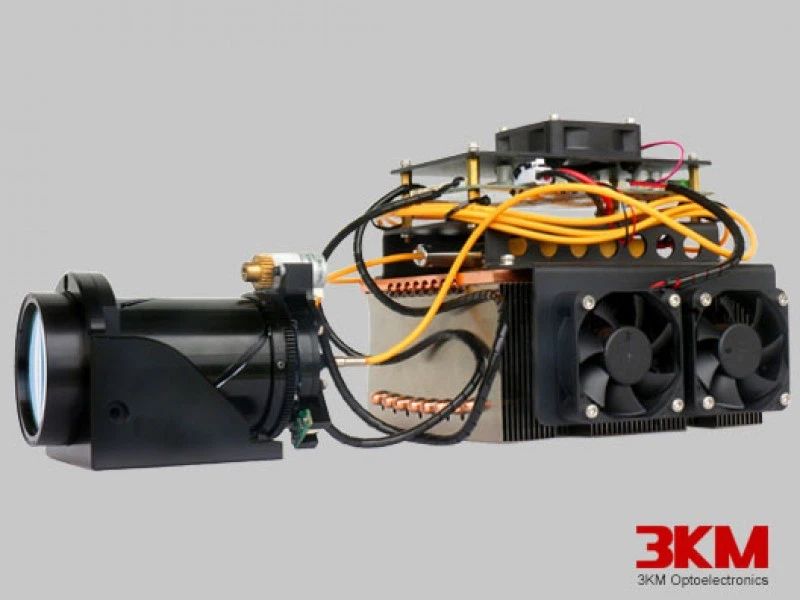

In addition, our system is also more reliable in terms of energy storage. The high - capacity batteries can store enough energy to ensure continuous operation even during extended periods of low sunlight. This is a significant advantage for applications in remote desert areas where maintenance and power supply can be difficult.
Other Applications and Related Products
The technology behind the Desert - Spec Solar Laser Beacon System has also been applied to other products, such as the All - Weather Green Laser Bird Repellent. This product uses a similar solar - powered system to charge its battery and operate the green laser, which is used to deter birds from airports, farms, and other areas.
The battery charging principles are similar for both products. However, the power requirements and battery capacities may differ depending on the specific application.
Conclusion
The battery charging time of the Desert - Spec Solar Laser Beacon System is influenced by several factors, including solar panel efficiency, sunlight intensity, battery capacity, and temperature. While it can take 6 - 8 hours to fully charge the battery under ideal conditions, real - world charging times may vary.
Our system is designed to be reliable and self - sustaining in harsh desert environments. It offers a relatively fast charging time compared to other similar products on the market, thanks to its high - efficiency solar panels and advanced battery management system.
If you are interested in purchasing the Desert - Spec Solar Laser Beacon System or have any questions about its performance, battery charging time, or other features, please don't hesitate to contact us for a procurement discussion. We are committed to providing you with the best solution for your specific needs.
References
- "Solar Energy Fundamentals" by John A. Duffie and William A. Beckman
- "Battery Technology Handbook" edited by Thomas J. Garver