
Hey there! As a supplier of green laser illumination, I've often been asked about the differences between green laser illumination and red laser illumination. So, I thought I'd take a moment to break it down for you.
Visibility
One of the most significant differences between green and red laser illumination is visibility. Green lasers are far more visible to the human eye than red lasers. This is because the human eye is more sensitive to green light, which sits right in the middle of the visible light spectrum. When you're out in the field, a green laser beam will stand out much more clearly, even in broad daylight. It's like the difference between a neon sign and a regular light bulb in a busy city street.
For example, if you're using a laser for bird repellent purposes, a green laser will be much more effective. Birds can see the green laser beam from a greater distance, and it's more likely to startle them. Check out our All-Weather Green Laser Bird Repellent for a great solution that takes advantage of this high visibility.
On the other hand, red lasers are less visible, especially in bright conditions. They're okay for use in low-light environments, like at night or in a dimly lit room. But if you're trying to use a red laser outdoors during the day, you'll probably have a hard time seeing the beam.
Power and Efficiency
Green lasers generally require more power to operate compared to red lasers. This is because the technology used to produce green lasers is more complex. Green lasers typically use a process called frequency doubling, which involves converting infrared light into green light. This conversion process isn't 100% efficient, so more power is needed to generate the same amount of visible light as a red laser.
However, despite the higher power requirements, green lasers can still be more efficient in certain applications. For instance, in long-range illumination, the high visibility of green lasers means that you can achieve the same effect with a lower power output compared to a red laser. Our Desert-Spec Solar Laser Beacon System is a great example of this. It uses green lasers to provide long-range illumination while being powered by solar energy, making it both powerful and energy-efficient.
Red lasers, on the other hand, are simpler in design and require less power to operate. They're a good choice for applications where power consumption is a major concern, such as small handheld devices.
Cost
Cost is another factor to consider when choosing between green and red laser illumination. Green lasers are generally more expensive than red lasers. This is due to the more complex technology involved in their production, as well as the higher quality components required.
The frequency doubling process used in green lasers requires precise alignment and high-quality crystals, which can drive up the cost. Additionally, the power supply and cooling systems for green lasers are often more sophisticated, adding to the overall expense.
Red lasers, on the other hand, are more affordable. They're widely available and used in a variety of consumer products, from laser pointers to barcode scanners. If you're on a tight budget, a red laser might be the way to go.
Applications
The differences in visibility, power, and cost between green and red laser illumination mean that they're suitable for different applications.
Green lasers are ideal for applications where high visibility is crucial. As mentioned earlier, they're great for bird repellent systems, as the birds can easily see the bright green beam. They're also commonly used in astronomy, where the high visibility of the green laser makes it easier to point out stars and constellations in the night sky.
In the field of construction and surveying, green lasers are preferred for their long-range visibility. They can be used to project straight lines and levels over long distances, making it easier for workers to ensure accurate measurements.
Red lasers, on the other hand, are often used in applications where cost and power efficiency are more important. They're commonly found in laser pointers, barcode scanners, and some medical devices. They're also used in some military applications, where their lower visibility can be an advantage in certain situations.
Safety
When it comes to safety, both green and red lasers need to be handled with care. Laser beams can cause damage to the eyes, especially if they're focused directly on the retina.
Green lasers are generally considered to be more dangerous than red lasers due to their higher visibility. The human eye is more likely to be attracted to the bright green beam, increasing the risk of accidental exposure. It's important to follow all safety guidelines when using green lasers, such as wearing appropriate eye protection and avoiding pointing the laser at people or animals.
Red lasers are also dangerous, but the risk is slightly lower due to their lower visibility. However, it's still important to take precautions when using red lasers, especially if they're high-powered.
Conclusion
So, there you have it - the main differences between green laser illumination and red laser illumination. As a supplier of green laser illumination, I believe that green lasers offer many advantages, especially in terms of visibility and long-range applications. But red lasers still have their place, especially in applications where cost and power efficiency are key.

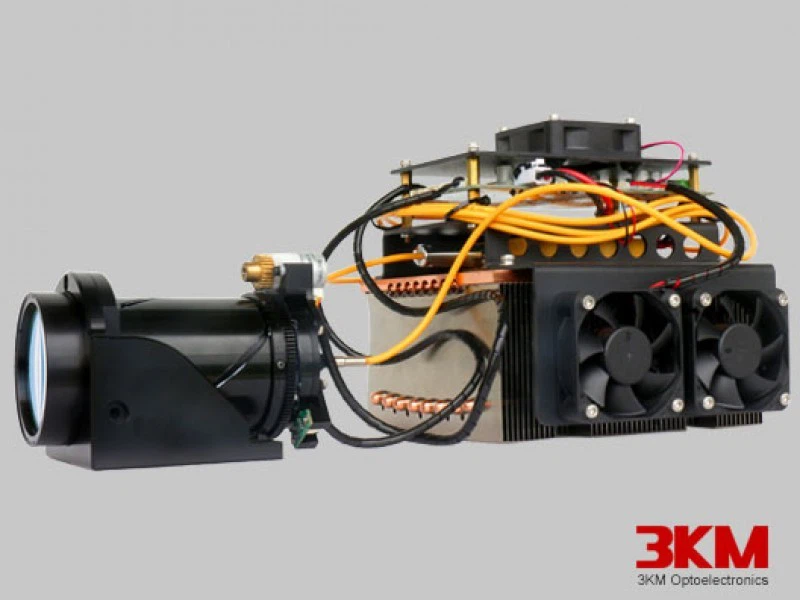
If you're interested in learning more about our green laser illumination products or have any questions about which type of laser is right for your application, don't hesitate to get in touch. We're here to help you make the best choice for your needs. Whether you're looking for a bird repellent system or a long-range illumination solution, we've got you covered.
References
- "Laser Safety Guide" - International Laser Safety Association
- "The Physics of Lasers" - Various academic sources