
Hey there! As a provider of fixed - focus IR laser illumination, I've been getting a lot of questions lately about how the quality of our products affects the image quality of cameras. So, I thought I'd take a deep dive into that topic and share some insights with you all.
Let's start by understanding what fixed - focus IR laser illumination is. Simply put, it's a type of illumination that uses infrared light at a fixed focus. This light is invisible to the human eye but can be detected by cameras, especially those used in night vision and low - light surveillance.
1. Brightness and Uniformity
One of the most crucial factors in how our fixed - focus IR laser illumination affects camera image quality is brightness. A bright IR laser can significantly enhance the visibility of objects in low - light conditions. When the illumination is bright enough, cameras can capture clearer images, with better - defined details.
For example, in a security camera system installed in a large parking lot at night, a high - quality fixed - focus IR laser can illuminate the entire area, allowing the camera to see license plate numbers and facial features of people. If the brightness is too low, the images will appear grainy and the details will be lost in the darkness.
But brightness alone isn't enough. Uniformity also plays a huge role. An unevenly illuminated scene can result in some parts of the image being over - exposed while others are under - exposed. Our high - quality fixed - focus IR laser illumination is designed to provide a uniform spread of light. This means that the camera gets a consistent level of light across the entire field of view, resulting in a more balanced and clear image.

2. Wavelength of the IR Laser
The wavelength of the IR laser is another important aspect. Different cameras are sensitive to different wavelengths of infrared light. Our fixed - focus IR lasers come in a range of wavelengths to match the specific needs of various camera models.
If the wavelength of the IR laser doesn't match the camera's sensitivity, the image quality can be severely affected. For instance, if the camera is most sensitive to a particular infrared wavelength and the laser emits light at a different wavelength, the camera may not be able to detect the light effectively. This can lead to a dark or noisy image, even if the laser is supposed to be providing sufficient illumination.
3. Beam Angle
The beam angle of the fixed - focus IR laser illumination determines how wide or narrow the area of illumination is. A narrow beam angle is great for focusing light on a specific object or a small area. For example, if you're using a camera to monitor a single door at night, a narrow - beam IR laser can light up just that door area, providing high - contrast images of anyone entering or leaving.
On the other hand, a wide beam angle is useful for covering a large area. In a warehouse or a large outdoor venue, a wide - beam fixed - focus IR laser can illuminate the entire field of view of the camera. Choosing the right beam angle for your camera setup is essential for getting the best image quality. If the beam angle is too narrow, parts of the scene may be left in the dark. If it's too wide, the light may be spread too thin, resulting in overall dimmer illumination.
4. Stability of the Laser
The stability of our fixed - focus IR laser illumination is also key to maintaining good image quality in cameras. Fluctuations in the laser's output can cause flickering in the camera images. This flickering can be extremely annoying, especially in surveillance applications where you need to have a continuous and stable view of the scene.
Our products are engineered to provide a stable output of infrared light. We use high - quality components and advanced manufacturing techniques to ensure that the laser operates at a consistent level. This stability helps cameras capture smooth and clear images without any distracting flickers.
5. Compatibility with Cameras
Not all cameras are created equal, and they may have different requirements when it comes to IR laser illumination. As a fixed - focus IR laser illumination provider, we understand the importance of compatibility. Our products are designed to work seamlessly with a wide range of camera models, including both consumer - grade and professional - grade cameras.
Some cameras may have built - in IR filters that need to be removed or bypassed to work effectively with our IR lasers. Others may require specific settings to optimize the use of the illumination. We offer support to help our customers set up their cameras correctly with our fixed - focus IR laser illumination to achieve the best possible image quality.
Our Product Line
We have a diverse range of fixed - focus IR laser illumination products that can meet different needs. For example, our Explosion - proof IR Laser Illuminator is designed for use in hazardous environments where safety is a top priority. It provides high - quality illumination while ensuring compliance with safety standards.
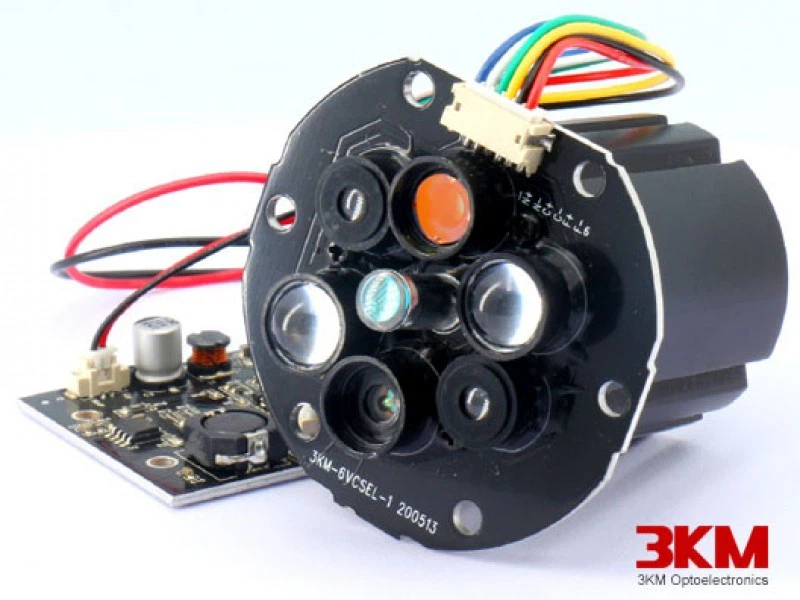
Another great product in our lineup is the VCSEL IR Laser Diode. VCSEL technology offers several advantages, such as better efficiency, smaller size, and more precise control of the light output. This results in improved image quality for cameras using this type of illumination.
Conclusion
In conclusion, the quality of fixed - focus IR laser illumination has a profound impact on the image quality of cameras. Factors like brightness, uniformity, wavelength, beam angle, stability, and compatibility all play crucial roles. As a supplier, we are committed to providing high - quality products that can enhance the performance of your cameras.
If you're in the market for fixed - focus IR laser illumination and want to improve the image quality of your camera systems, we'd love to hear from you. Reach out to us to start a discussion about your specific needs and how our products can meet them. Let's work together to get the best possible images from your cameras!
References
- Digital Imaging for Dummies, Emily A. Vander Veer
- Handbook of Infrared Technology for Defense and Security, Ronald A. Driggers