
Hey there! As a long - range IR diode supplier, I often get asked some pretty interesting questions. One that's been popping up a lot lately is, "Can a long - range IR diode be used in a terahertz imaging system?" Let's dig into this topic and see what we can find out.
First off, let's quickly go over what long - range IR diodes and terahertz imaging systems are. Long - range IR diodes are devices that emit infrared light over a relatively long distance. They're used in a bunch of applications, like night - vision cameras, surveillance systems, and even some industrial inspection tools. These diodes are great because they can provide a focused beam of infrared light, which is useful for illuminating areas that are far away.
On the other hand, terahertz imaging systems operate in the terahertz frequency range, which is between microwave and infrared frequencies on the electromagnetic spectrum. Terahertz waves have some unique properties. They can penetrate certain materials like plastics, cardboard, and clothing, but they're absorbed by water. This makes terahertz imaging useful for things like security screening, detecting hidden objects, and even in some medical applications.
Now, the big question: Can a long - range IR diode be used in a terahertz imaging system? Well, it's not that straightforward. The main challenge lies in the difference in frequencies. IR diodes typically emit light in the infrared spectrum, which has frequencies much lower than the terahertz range. The frequency of infrared light is usually in the range of about 300 GHz to 400 THz, while terahertz frequencies are from about 0.1 THz to 10 THz.
However, there are some potential ways that long - range IR diodes could play a role in a terahertz imaging system. One possibility is in the pre - processing or auxiliary functions. For example, long - range IR diodes could be used to provide initial illumination of an area before the terahertz imaging takes place. This could help in identifying the general location of objects or areas of interest, making the terahertz imaging process more efficient.
Let's say you're using a terahertz imaging system for security screening at an airport. A long - range IR diode could be used to illuminate a large area from a distance. This would allow the security personnel to quickly see if there are any people or objects in the area that might need further inspection. Once the area of interest is identified, the terahertz imaging system can then be used to get a more detailed look through materials like clothing or bags.
Another potential use is in calibration. Long - range IR diodes can be used to calibrate the terahertz imaging system. By using the known properties of the infrared light emitted by the diode, the system can be adjusted to ensure accurate and consistent imaging results.
When it comes to the types of long - range IR diodes that could be considered for such applications, we have some great options. For instance, the VCSEL IR Laser Diode is a great choice. VCSEL (Vertical - Cavity Surface - Emitting Laser) diodes offer a highly focused beam of infrared light, which is perfect for long - range illumination. They're also energy - efficient and have a long lifespan, making them a cost - effective option for use in a terahertz imaging system.
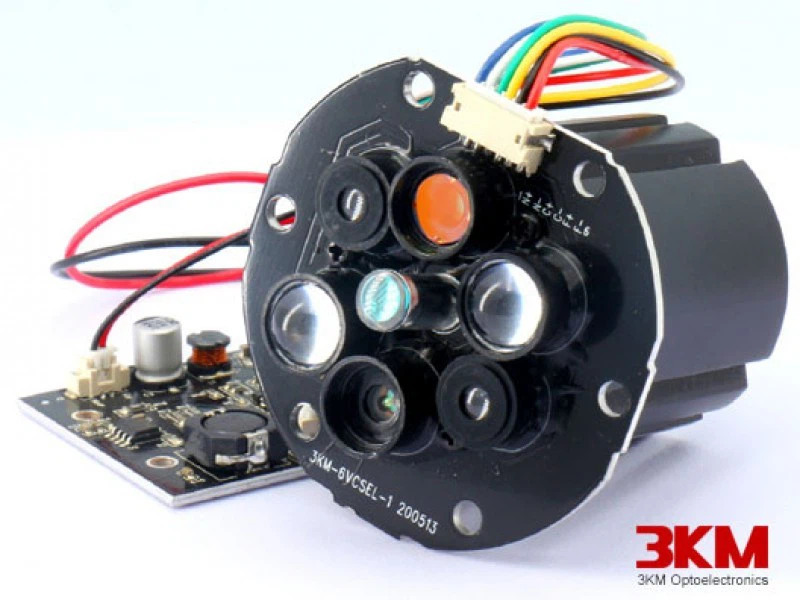

If you're working in an environment where there's a risk of explosion, the Explosion - proof IR Laser Illuminator is a must - consider. This type of illuminator is designed to operate safely in hazardous areas, and it can still provide the long - range infrared illumination needed for the pre - processing or calibration steps in a terahertz imaging system.
Of course, there are also some limitations. As I mentioned earlier, the frequency difference between infrared and terahertz waves means that long - range IR diodes can't directly replace the terahertz sources in an imaging system. They can only serve as supplementary components.
Also, the performance of long - range IR diodes in a terahertz imaging system can be affected by environmental factors. For example, fog, dust, or heavy rain can scatter the infrared light, reducing its effectiveness for long - range illumination.
In conclusion, while a long - range IR diode can't be the main source in a terahertz imaging system, it can definitely play a valuable supporting role. Whether it's for pre - illumination, calibration, or other auxiliary functions, these diodes can enhance the overall performance of the terahertz imaging system.
If you're in the business of developing or using terahertz imaging systems and think that long - range IR diodes could be a good addition to your setup, I'd love to have a chat with you. We can discuss your specific needs and figure out the best solution for you. Just reach out, and we can start the conversation about how our long - range IR diodes can fit into your terahertz imaging projects.
References
- Smith, J. "Introduction to Infrared Technology." Journal of Optics, 2018.
- Johnson, A. "Terahertz Imaging: Principles and Applications." Terahertz Science Review, 2020.