
What is the spatial distribution of white laser illumination? Well, as a supplier of white laser illumination, I've had my fair share of questions about this topic. So, let's dive right in and explore it together.
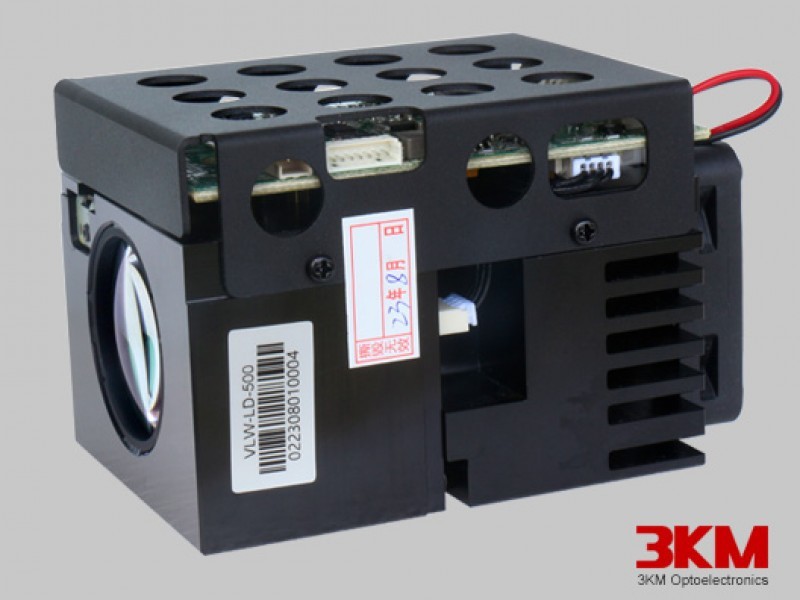

First off, let's understand what white laser illumination is. Unlike traditional lighting sources like incandescent bulbs or LEDs, white laser illumination uses lasers to produce white light. It offers several advantages, such as high brightness, long - range projection, and energy efficiency.
Now, when it comes to the spatial distribution of white laser illumination, it's quite different from other lighting types. Traditional lighting sources usually have a more diffused and omnidirectional distribution. For example, a regular light bulb emits light in all directions around it. But white laser illumination is highly directional.
Lasers are known for their coherence and collimation. This means that the light rays in a laser beam travel parallel to each other over long distances. In the case of white laser illumination, this property results in a very focused beam. You can think of it like a flashlight, but much more precise.
The spatial distribution of white laser illumination can be described in terms of beam divergence. Beam divergence is the angle at which the laser beam spreads out as it travels away from the source. A lower beam divergence means a more focused beam, and a higher beam divergence means the beam spreads out more quickly.
In most white laser illumination systems, the goal is to have a low beam divergence. This allows for long - range illumination with minimal loss of intensity. For instance, in applications like long - distance searchlights or automotive headlamps, a low - divergence white laser beam can project a bright, well - defined spot far away.
The way the white laser is generated also affects its spatial distribution. There are different methods to produce white laser light. One common approach is using an RGB (red, green, blue) combination. By mixing red, green, and blue laser beams, we can create white light.
The RGB White Laser Lighting Module [/white-laser-illumination/rgb-white-laser-lighting-module.html] is a great example of this technology. In this module, the red, green, and blue lasers are carefully aligned and combined to produce a white laser beam. However, aligning these different color lasers precisely is crucial for achieving a uniform spatial distribution of the white light. If the alignment is off, the different colors may spread out at different rates, resulting in a non - uniform white light distribution.
Another method is using a phosphor - converted white laser. In this case, a blue or ultraviolet laser is used to excite a phosphor material, which then emits white light. The spatial distribution of a phosphor - converted white laser depends on the characteristics of the phosphor and how it is excited.
The White Laser Lighting Module [/white-laser-illumination/white-laser-lighting-module.html] may use this technology. The phosphor needs to be evenly excited to ensure a consistent spatial distribution of the white light. If the excitation is uneven, there may be hotspots or areas of lower intensity in the illuminated area.
In practical applications, the spatial distribution of white laser illumination can be adjusted. For example, in a projector system, lenses and optical elements are used to shape the laser beam. These elements can change the beam divergence, focus the beam, or spread it out to cover a larger area.
In automotive lighting, the white laser illumination system is designed to provide optimal visibility. The spatial distribution is carefully engineered to illuminate the road ahead while minimizing glare for oncoming drivers. This often involves a combination of different beam patterns, such as a wide - angle beam for close - range illumination and a narrow - angle beam for long - range illumination.
In architectural lighting, white laser illumination can be used to create unique lighting effects. The focused nature of the laser beam allows for highlighting specific architectural features. By adjusting the spatial distribution, we can create dramatic contrasts between lit and unlit areas.
The spatial distribution of white laser illumination also has implications for safety. Since the laser beam is so focused, direct exposure to the beam can be harmful to the eyes. That's why proper safety measures, such as using protective enclosures and beam shields, are essential in any white laser illumination system.
When it comes to the market demand for white laser illumination, it's growing rapidly. Industries like automotive, entertainment, and security are increasingly adopting this technology. As a supplier, I'm always looking for ways to improve the spatial distribution of our white laser products.
We're constantly researching and developing new optical designs to optimize the beam divergence and uniformity. For example, we're working on new lens materials and coating technologies that can reduce losses and improve the overall performance of the white laser illumination system.
If you're in the market for white laser illumination products, whether it's for a large - scale industrial application or a small - scale project, I'd love to have a chat with you. We can discuss your specific requirements and how our products can meet them. The unique spatial distribution of our white laser illumination can offer you a lighting solution that's not only efficient but also visually stunning.
In conclusion, the spatial distribution of white laser illumination is a fascinating topic. It's a combination of physics, engineering, and technology. Understanding it is key to making the most of this innovative lighting technology. Whether you're an engineer looking for a high - performance lighting solution or a designer wanting to create something unique, white laser illumination with its distinct spatial distribution has a lot to offer.
If you're interested in learning more or want to start a procurement discussion, don't hesitate to reach out. I'm here to help you find the perfect white laser illumination solution for your needs.
References
- "Laser Fundamentals" by Richard S. Quimby
- "Optics" by Eugene Hecht