
Hey there! As a supplier of RGB White Laser Lighting Module, I often get asked about the power regulation of these nifty lighting modules. So, let's dive right in and break it down.
First off, what exactly is power regulation in the context of an RGB White Laser Lighting Module? Well, power regulation refers to the ability to control and adjust the amount of electrical power that is supplied to the module. This is crucial because it directly affects the brightness, color accuracy, and overall performance of the lighting.
Why Power Regulation Matters
Let's start by talking about why power regulation is so important. In a lighting system, different applications require different levels of brightness. For example, in a home theater setting, you might want a dim, ambient light during a movie screening. On the other hand, in a large conference room, you'll need a much brighter light to ensure that everyone can see clearly.
Power regulation allows you to fine - tune the brightness of the RGB White Laser Lighting Module according to your specific needs. It also helps in conserving energy. By reducing the power when full brightness isn't necessary, you can save on electricity costs and extend the lifespan of the module.
How Power Regulation Works
There are a few different ways to regulate the power of an RGB White Laser Lighting Module. One common method is Pulse Width Modulation (PWM). PWM works by rapidly turning the power on and off at a high frequency. The ratio of the time the power is on (pulse width) to the total time of the cycle determines the average power supplied to the module.
For example, if the power is on for half of the cycle and off for the other half, the average power is 50% of the maximum power. By adjusting this ratio, you can control the brightness of the lighting. PWM is a very effective method because it allows for precise control and can be easily implemented using electronic circuits.
Another method is Analog Dimming. In analog dimming, the voltage or current supplied to the module is directly adjusted. By reducing the voltage or current, the power consumption of the module decreases, and so does the brightness. However, analog dimming has some limitations. It can affect the color quality of the light, especially in RGB modules, as different colors may respond differently to changes in voltage or current.
Factors Affecting Power Regulation
Several factors can affect the power regulation of an RGB White Laser Lighting Module. One of the most important factors is the temperature. As the temperature of the module increases, its electrical characteristics can change. This can lead to variations in the brightness and color of the light, even if the power is regulated.
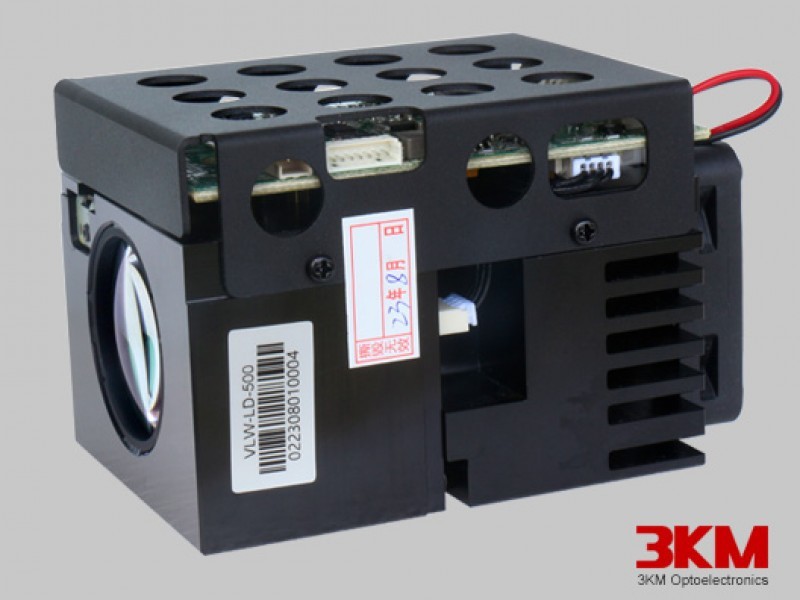

To compensate for temperature changes, many modules are equipped with temperature sensors. These sensors monitor the temperature of the module and adjust the power regulation accordingly. This helps in maintaining a consistent brightness and color output, regardless of the ambient temperature.
The quality of the power supply also plays a crucial role. A stable and clean power supply is essential for accurate power regulation. If the power supply has fluctuations or noise, it can cause the brightness of the lighting to flicker or the color to shift. Using a high - quality power supply with proper filtering can help in minimizing these issues.
Applications and Power Requirements
Different applications have different power requirements for RGB White Laser Lighting Modules. In architectural lighting, for example, the modules may need to provide a high level of brightness to illuminate large buildings or structures. In this case, a higher power module with robust power regulation capabilities is required.
On the other hand, in decorative lighting, such as in a museum or art gallery, the focus is more on creating a specific mood and highlighting certain objects. Here, lower power modules with precise power regulation can be used to create subtle lighting effects.
In automotive lighting, RGB White Laser Lighting Modules are becoming increasingly popular. They can be used for headlights, taillights, and interior lighting. Automotive applications require modules that can withstand harsh environmental conditions, such as high temperatures and vibrations. The power regulation in these modules needs to be reliable and efficient to ensure safe and effective operation.
Our RGB White Laser Lighting Module Offerings
As a supplier, we understand the importance of power regulation in RGB White Laser Lighting Modules. That's why our modules are designed with state - of - the - art power regulation technology. We offer a wide range of modules with different power ratings and regulation capabilities to meet the diverse needs of our customers.
Our modules use advanced PWM and analog dimming techniques to provide precise control over brightness and color. They are also equipped with temperature sensors and high - quality power supplies to ensure stable and consistent performance. Whether you need a module for a small home project or a large - scale commercial application, we have the right solution for you.
Contact Us for Your Lighting Needs
If you're in the market for a high - quality RGB White Laser Lighting Module or White Laser Lighting Module, we'd love to hear from you. Our team of experts can help you choose the right module for your specific application and provide you with all the technical support you need.
Whether you have questions about power regulation, installation, or maintenance, we're here to assist you. Don't hesitate to reach out and start a conversation about your lighting requirements. We're confident that our products and services will exceed your expectations.
References
- Lighting Handbook: Reference and Application Guide.
- Technical Papers on Laser Lighting Technology.