
Hey there! As a supplier of white laser illumination, I often get asked about the modulation frequency of white laser illumination. It's a topic that's both fascinating and crucial for anyone looking to use white laser lighting effectively. So, let's dive right in and explore what this modulation frequency is all about.
First off, let's understand what modulation frequency means in the context of white laser illumination. Modulation frequency refers to how fast the intensity of the white laser light can be changed or "modulated." In simpler terms, it's like how quickly you can turn the brightness of a light on and off. This is important because different applications require different modulation frequencies.
For example, in some industrial applications, a high modulation frequency might be needed to synchronize the white laser illumination with other high - speed processes. Imagine a manufacturing line where products are moving at a super - fast pace. The white laser light needs to be able to turn on and off rapidly to accurately illuminate the products for inspection or measurement. A low modulation frequency in this case would result in blurry or inaccurate data.
On the other hand, in some consumer applications like home lighting, a lower modulation frequency might be sufficient. You don't need the light to be modulated at extremely high speeds for general home use. However, even in home lighting, there are benefits to having some level of modulation. For instance, it can be used to create different lighting effects, like dimming or color - changing features.
Now, let's talk about the factors that affect the modulation frequency of white laser illumination. One of the main factors is the type of white laser technology used. There are different ways to produce white laser light, and each has its own limitations and capabilities when it comes to modulation frequency.
One common method is using an RGB (Red, Green, Blue) white laser lighting module. In an RGB system, the red, green, and blue lasers are combined to create white light. The modulation frequency of an RGB white laser lighting module depends on the individual characteristics of each laser. Some lasers can be modulated at higher frequencies than others. You can check out our RGB White Laser Lighting Module for more details on this technology.
Another factor is the power supply and control system. A high - quality power supply and an advanced control system can enable a higher modulation frequency. The power supply needs to be able to provide a stable and fast - changing current to the lasers, while the control system needs to be able to send precise signals to modulate the light intensity.
The physical design of the white laser lighting module also plays a role. For example, the heat dissipation design can affect the performance of the lasers. If the lasers overheat, their ability to be modulated at high frequencies can be reduced. So, a well - designed module with efficient heat dissipation can support a higher modulation frequency. You can take a look at our White Laser Lighting Module to see how we've optimized the design for better performance.
In terms of typical values, the modulation frequency of white laser illumination can range from a few kilohertz (kHz) to several megahertz (MHz). In industrial applications, frequencies in the MHz range are often required for high - speed imaging, machine vision, and other precision tasks. In consumer applications, frequencies in the kHz range might be sufficient for basic lighting effects.
It's also important to note that the modulation frequency is not the only factor to consider when choosing a white laser illumination system. Other factors like color accuracy, power consumption, and beam quality also matter. A system with a high modulation frequency but poor color accuracy might not be suitable for applications where color is important, like in photography or display lighting.
When it comes to choosing the right modulation frequency for your application, it's essential to understand your specific requirements. If you're not sure, our team of experts is here to help. We can analyze your needs and recommend the most suitable white laser illumination system with the appropriate modulation frequency.
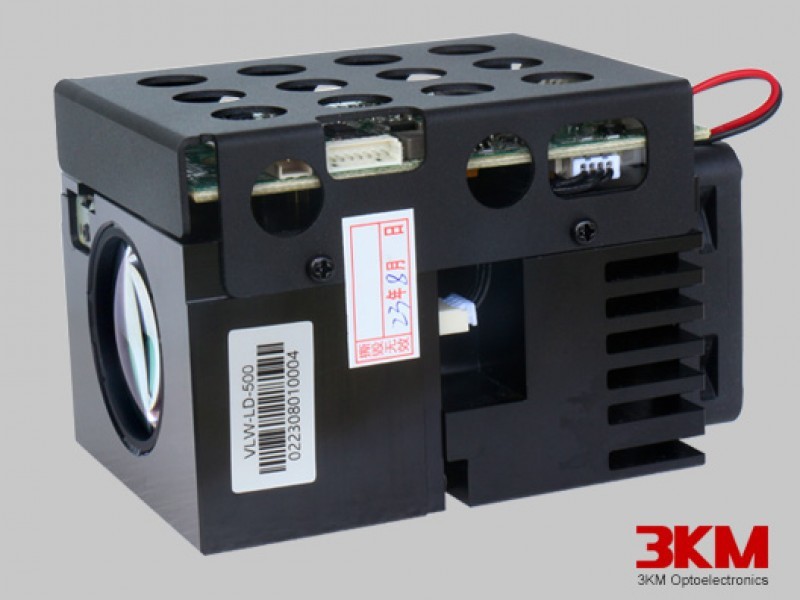

Whether you're in the industrial sector, looking for high - speed lighting solutions, or in the consumer market, wanting to add some cool lighting effects to your home, we've got you covered. Our white laser illumination products are designed to meet a wide range of needs, with different modulation frequencies available to suit various applications.
If you're interested in learning more about our white laser illumination products or have any questions about the modulation frequency, don't hesitate to reach out. We're always happy to have a chat and discuss how our products can fit your needs. Whether it's for a small - scale project or a large - scale industrial application, we're committed to providing you with the best white laser lighting solutions.
In conclusion, the modulation frequency of white laser illumination is a key parameter that can significantly impact the performance of your lighting system. By understanding the factors that affect it and choosing the right frequency for your application, you can ensure that you get the most out of your white laser lighting. So, if you're in the market for white laser illumination, give us a shout, and let's start a conversation about how we can help you with your lighting needs.
References:
- General knowledge of white laser technology and lighting applications.
- Technical specifications of our white laser lighting modules.