
Hey there! As a supplier of 5km long range white light illumination, I've been getting a lot of questions lately about how humidity affects our products. So, I thought I'd take a deep dive into this topic and share what I've learned.
First off, let's talk about what humidity is. Humidity refers to the amount of water vapor present in the air. It's usually expressed as a percentage, with 100% humidity meaning the air is completely saturated with water vapor. Now, you might be wondering, "How does this water vapor in the air impact my 5km long range white light illumination?" Well, there are a few key ways.
1. Absorption and Scattering of Light
One of the most significant impacts of humidity on long range white light illumination is the absorption and scattering of light by water vapor molecules. When light travels through the air, it can interact with these water molecules. Water vapor has specific absorption bands in the electromagnetic spectrum, and some of the light energy gets absorbed by these molecules. This absorption reduces the intensity of the light that reaches the target at a 5km distance.
Scattering is another issue. Water vapor molecules can scatter light in different directions. Instead of traveling in a straight line towards the intended target, some of the light is redirected. This scattering can cause the light beam to spread out, making it less focused and reducing the effective range and clarity of the illumination. As a result, the visibility at the 5km mark might be significantly affected, and the area might not be illuminated as brightly or clearly as it would be in low - humidity conditions.
2. Impact on Optical Components
Our 5km long range white light illumination systems rely on various optical components such as lenses, mirrors, and prisms. High humidity can have a detrimental effect on these components. Moisture in the air can condense on the surfaces of these optical elements. When water droplets form on the lenses, for example, it can cause distortion of the light passing through them. This distortion can lead to a decrease in the quality of the illumination, including issues like blurring, uneven light distribution, and a reduction in the overall sharpness of the illuminated area.
Moreover, over time, the presence of moisture can also lead to corrosion of the optical components. Corrosion can damage the delicate coatings on the lenses and mirrors, further degrading the performance of the illumination system. This means that in high - humidity environments, the lifespan of these components might be shorter, and more frequent maintenance or replacement might be required.
3. Effect on Electrical Components
In addition to the optical components, our long range white light illumination systems also have electrical components. High humidity can pose a risk to these electrical parts. Moisture can cause electrical short - circuits, which can damage the power supply, control circuits, and other electronic elements of the system. This can lead to malfunctions or even complete failure of the illumination system.
Even if a short - circuit doesn't occur immediately, the presence of moisture can increase the rate of oxidation of electrical contacts. Oxidation can increase the resistance in the electrical circuits, which in turn can lead to overheating and reduced efficiency of the system. All these factors can have a negative impact on the performance and reliability of our 5km long range white light illumination products in high - humidity conditions.
Mitigating the Effects of Humidity
So, what can we do to mitigate the impact of humidity on our 5km long range white light illumination systems? Well, we've been working hard on developing solutions.
One approach is to use sealed enclosures for the optical and electrical components. By sealing the components, we can prevent moisture from getting inside and causing damage. These enclosures are designed to be airtight and are often filled with a dry gas to further reduce the humidity levels around the components.
We also use special coatings on the optical components. These coatings are hydrophobic, which means they repel water. This helps to prevent water droplets from forming on the surfaces of the lenses and mirrors, reducing the distortion and corrosion issues caused by moisture.
In terms of the electrical components, we use moisture - resistant materials and design the circuits to be more robust against the effects of humidity. For example, we use conformal coatings on the printed circuit boards to protect them from moisture and oxidation.
Our Product Range
As a supplier, we offer a range of high - quality 5km long range white light illumination products. We also have some innovative solutions like the White Laser Lighting Module. This module uses advanced laser technology to provide a powerful and focused white light beam that can reach up to 5km. It's designed to be more resistant to the effects of humidity compared to traditional lighting systems.
Another great product in our lineup is the RGB White Laser Lighting Module. This module not only provides long - range white light illumination but also allows for color control. You can adjust the color temperature and even create different lighting effects, which is perfect for various applications such as surveillance, outdoor events, and industrial lighting.
Conclusion
In conclusion, humidity can have a significant impact on 5km long range white light illumination. It can affect the absorption and scattering of light, damage optical and electrical components, and reduce the overall performance and reliability of the system. However, with our innovative products and mitigation strategies, we're able to minimize these effects and provide high - quality illumination solutions even in challenging humidity conditions.

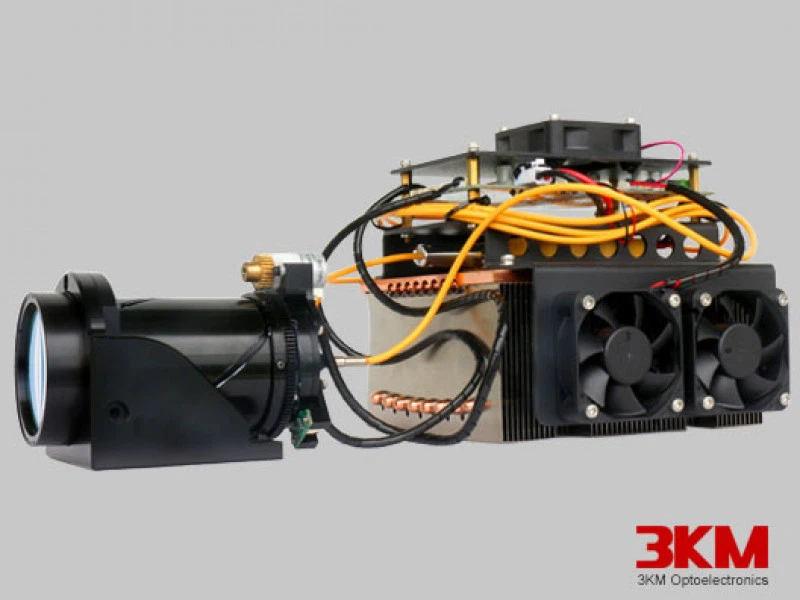
If you're in the market for 5km long range white light illumination products, we'd love to have a chat with you. Whether you're a security company looking to enhance your surveillance capabilities, an event organizer in need of long - range lighting, or an industrial facility requiring reliable illumination, we have the right solutions for you. Reach out to us to discuss your specific needs and let's work together to find the perfect lighting solution for your project.
References
- "Optics and Photonics Handbook", edited by Daniel Malacara.
- "Electrical Engineering for Non - Electrical Engineers", by Keith Billings.
- Research papers on the effects of environmental factors on lighting systems from peer - reviewed journals in the field of optics and electrical engineering.