
As a supplier of RGB White Laser Lighting Modules, I often encounter questions from customers about various technical aspects of our products. One of the frequently asked questions is about the extinction ratio of RGB White Laser Lighting Modules. In this blog post, I will delve into what the extinction ratio is, its significance in RGB White Laser Lighting Modules, and how it impacts the performance of our lighting solutions.
Understanding the Extinction Ratio
The extinction ratio is a crucial parameter in the field of optics and photonics, especially when dealing with laser-based systems. In simple terms, the extinction ratio is defined as the ratio of the optical power in the “on” state to the optical power in the “off” state of a light source. Mathematically, it can be expressed as:
$Extinction Ratio (ER) = \frac{P_{on}}{P_{off}}$
where $P_{on}$ is the power of the light when the source is fully on, and $P_{off}$ is the residual power when the source is supposed to be off. The extinction ratio is usually expressed in decibels (dB) using the formula:
$ER (dB)= 10 \log_{10}(\frac{P_{on}}{P_{off}})$
A high extinction ratio indicates that the light source can be effectively turned off, with very little residual light leakage when it is in the off state. Conversely, a low extinction ratio means that there is a significant amount of light still present even when the source is supposed to be off, which can lead to various issues in lighting applications.
Significance of Extinction Ratio in RGB White Laser Lighting Modules
RGB White Laser Lighting Modules combine red, green, and blue laser sources to produce white light. The extinction ratio plays a vital role in ensuring the quality and performance of these modules. Here are some key reasons why the extinction ratio is important:
Color Purity
In RGB lighting systems, accurate control of each color component is essential for achieving the desired color temperature and color rendering index (CRI). A high extinction ratio for each of the red, green, and blue lasers ensures that when a particular color is turned off, there is minimal leakage of that color into the overall light output. This helps in maintaining high color purity and enables precise color mixing to produce a pure and accurate white light.
For example, if the extinction ratio of the red laser is low, there may be a slight red tint in the white light even when the red laser is supposed to be off. This can affect the overall color quality and make it difficult to achieve the desired color characteristics.
Contrast Ratio
The contrast ratio is an important metric in lighting applications, especially in displays and projection systems. A high extinction ratio contributes to a high contrast ratio by allowing for a clear distinction between the bright and dark areas of the illuminated scene. When the lasers can be effectively turned off with minimal residual light, the dark areas appear truly dark, enhancing the overall visual experience.
In RGB White Laser Lighting Modules, a high contrast ratio is crucial for applications such as theater lighting, museum displays, and high - end home entertainment systems. It helps in creating a more immersive and visually appealing environment.
Energy Efficiency
A high extinction ratio also improves the energy efficiency of RGB White Laser Lighting Modules. When the lasers can be completely turned off with minimal power consumption in the off state, less energy is wasted. This is particularly important in applications where long - term operation and energy savings are a priority, such as in commercial and industrial lighting.
Factors Affecting the Extinction Ratio in RGB White Laser Lighting Modules
Several factors can influence the extinction ratio of RGB White Laser Lighting Modules. Understanding these factors is essential for optimizing the performance of our products.
Laser Source Characteristics
The inherent characteristics of the individual red, green, and blue laser sources play a significant role in determining the extinction ratio. Factors such as the laser's modulation characteristics, threshold current, and internal losses can affect how effectively the laser can be turned off.
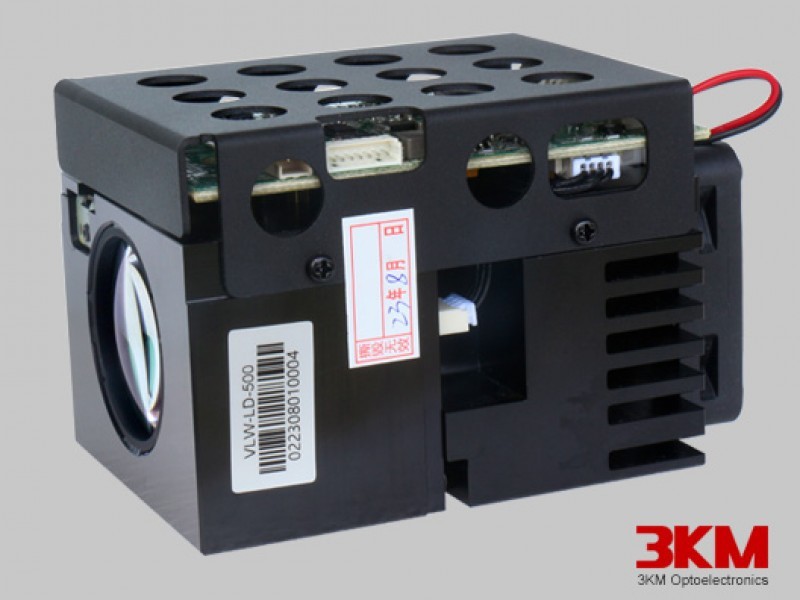

For example, lasers with a lower threshold current are generally easier to turn off completely, resulting in a higher extinction ratio. Additionally, lasers with low internal losses will have less residual light leakage when they are in the off state.
Driving Circuitry
The driving circuitry used to control the lasers also has a major impact on the extinction ratio. The quality of the electrical signals used to modulate the lasers, including the rise and fall times, can affect how quickly and completely the lasers can be turned on and off.
A well - designed driving circuit with fast switching times and accurate control can help in achieving a high extinction ratio. On the other hand, a poorly designed driving circuit may introduce noise and instability, leading to a lower extinction ratio.
Optical Components
The optical components used in the RGB White Laser Lighting Module, such as lenses, mirrors, and beam splitters, can also affect the extinction ratio. Imperfections in these components, such as surface scratches, reflections, and scattering, can cause light leakage and reduce the overall extinction ratio.
Proper selection and calibration of optical components are essential for minimizing these effects and ensuring a high extinction ratio.
Measuring and Optimizing the Extinction Ratio
Measuring the extinction ratio of RGB White Laser Lighting Modules is a critical step in the quality control process. Specialized optical measurement equipment, such as power meters and optical spectrum analyzers, can be used to accurately measure the optical power in the on and off states of the lasers.
Once the extinction ratio is measured, various techniques can be employed to optimize it. These may include:
Laser Selection
Choosing high - quality laser sources with good modulation characteristics and low internal losses can significantly improve the extinction ratio. Working closely with our laser suppliers to select the most suitable lasers for our RGB White Laser Lighting Modules is an important part of our product development process.
Circuit Design Optimization
Optimizing the driving circuitry to ensure fast and accurate switching of the lasers can help in achieving a higher extinction ratio. This may involve using high - speed transistors, precise control algorithms, and proper shielding to reduce electrical noise.
Optical Component Calibration
Calibrating and aligning the optical components in the module can minimize light leakage and improve the extinction ratio. This may include adjusting the position and orientation of lenses and mirrors, as well as using anti - reflective coatings to reduce reflections.
Conclusion
The extinction ratio is a critical parameter in RGB White Laser Lighting Modules. It affects the color purity, contrast ratio, and energy efficiency of our lighting solutions. As a [Your Company's Position] at [Your Company], we are committed to ensuring that our RGB White Laser Lighting Modules have a high extinction ratio to provide our customers with the best possible lighting performance.
If you are interested in learning more about our RGB White Laser Lighting Module or White Laser Lighting Module products and how the extinction ratio impacts their performance, please feel free to contact us. We are always ready to discuss your specific lighting requirements and provide you with the most suitable solutions.
References
- Saleh, B. E. A., & Teich, M. C. (2007). Fundamentals of Photonics. Wiley.
- Kasap, S. O. (2017). Optoelectronics and Photonics: Principles and Practices. Pearson.