
In the dynamic realm of virtual reality (VR) and augmented reality (AR), lighting plays a pivotal role in creating immersive and realistic experiences. As a supplier of White Laser Lighting Modules, I've witnessed firsthand the transformative power of precise lighting in these cutting - edge technologies. In this blog, I'll delve into the specific requirements for VR/AR lighting when it comes to white laser lighting modules.
Understanding the Basics of VR/AR Lighting
VR aims to transport users to entirely virtual environments, while AR overlays digital information onto the real world. In both cases, lighting is crucial for several reasons. Firstly, proper lighting helps in establishing a sense of depth and dimension. In a VR environment, accurate lighting can make virtual objects appear more three - dimensional, enhancing the overall realism. In AR, it ensures that the digital elements blend seamlessly with the real - world surroundings.
Secondly, lighting affects the mood and atmosphere of the experience. Soft, diffused lighting can create a calming and relaxing environment, while bright, harsh lighting might be used to simulate high - energy or dangerous situations.
Key Requirements for VR/AR Lighting with White Laser Lighting Modules
Color Accuracy
One of the most critical requirements for VR/AR lighting is color accuracy. The human eye is highly sensitive to color, and any deviation from the natural color spectrum can break the immersion. White laser lighting modules offer an advantage in this regard. They can be designed to produce a wide color gamut, which means they can reproduce a large range of colors accurately.
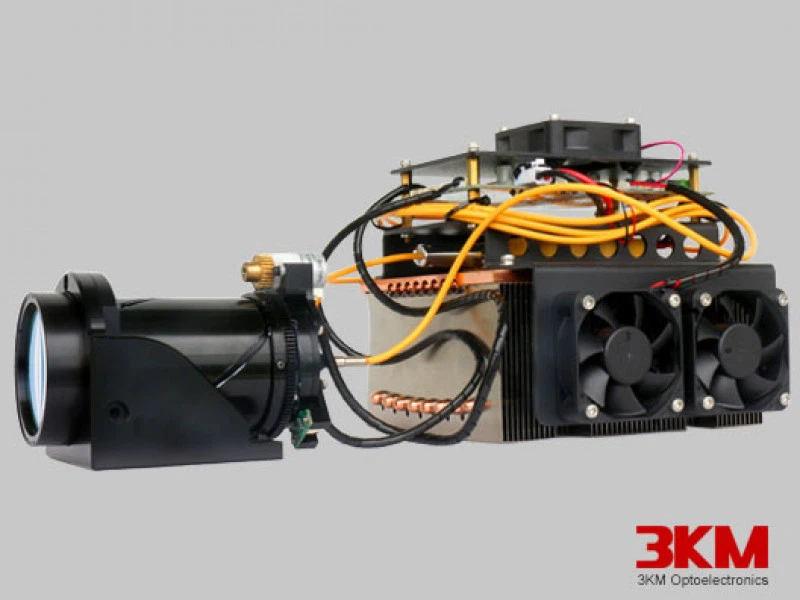

Our RGB White Laser Lighting Module is engineered to provide a high - quality color rendering index (CRI). A high CRI value indicates that the light source can accurately render colors as they would appear under natural light. This is essential for VR/AR applications where the colors of virtual objects, textures, and environments need to be as realistic as possible.
Uniformity of Lighting
Uniform lighting is another essential requirement. In VR, uneven lighting can cause distractions and make the virtual environment seem less believable. For example, if one part of a virtual room is significantly brighter than another, it can draw the user's attention away from the intended focal points.
White laser lighting modules can be designed to distribute light evenly across the field of view. Through advanced optical design and beam shaping techniques, we can ensure that the light emitted from our White Laser Lighting Module is uniform, creating a consistent and immersive experience for the user.
Low Latency
Latency, or the delay between an action and its corresponding visual response, is a major issue in VR/AR. Even a small delay can cause discomfort and disorientation for the user. Lighting systems need to have low latency to keep up with the rapid changes in the virtual or augmented environment.
White laser lighting modules have a fast response time. Lasers can be modulated at high frequencies, allowing for quick changes in light intensity and color. This enables the lighting to adapt instantly to the movements and actions within the VR/AR scene, reducing latency and providing a smooth and seamless experience.
High Brightness
VR/AR devices often need to compete with ambient light in the real world. In AR, for example, the digital elements need to be bright enough to be visible even in well - lit environments. White laser lighting modules can produce high levels of brightness, making them suitable for these applications.
The high brightness of our white laser lighting modules also allows for better visibility of fine details in virtual objects. Whether it's the intricate patterns on a virtual fabric or the small text on a digital sign, high - brightness lighting ensures that these details are clearly visible, enhancing the overall quality of the VR/AR experience.
Energy Efficiency
As VR/AR devices become more portable and battery - powered, energy efficiency is a significant concern. White laser lighting modules are relatively energy - efficient compared to some traditional lighting sources. They convert a high percentage of electrical energy into light energy, reducing power consumption.
This energy efficiency not only extends the battery life of VR/AR devices but also helps in reducing heat generation. Excessive heat can cause discomfort for the user and may also damage the internal components of the device.
Challenges and Solutions in Meeting VR/AR Lighting Requirements
Heat Dissipation
Although white laser lighting modules are energy - efficient, they still generate some heat. In a compact VR/AR device, heat can accumulate quickly and affect the performance of the lighting module and other components.
To address this challenge, we have developed advanced heat dissipation techniques. Our white laser lighting modules are equipped with heat sinks and cooling fins that efficiently transfer heat away from the laser source. Additionally, we use materials with high thermal conductivity to ensure that the heat is dissipated effectively.
Cost
The cost of white laser lighting modules has been a barrier to widespread adoption in the past. However, as technology advances and production volumes increase, the cost is gradually coming down.
We are constantly working on optimizing our manufacturing processes to reduce costs without compromising on quality. By leveraging economies of scale and using cost - effective materials, we aim to make our White Laser Lighting Module more accessible to VR/AR device manufacturers.
The Future of VR/AR Lighting with White Laser Lighting Modules
The future of VR/AR lighting looks promising with the use of white laser lighting modules. As the demand for more immersive and realistic experiences grows, the requirements for lighting will become even more stringent.
We expect to see further improvements in color accuracy, uniformity, and energy efficiency. New applications, such as VR/AR in education, healthcare, and industrial training, will also drive the development of more advanced lighting solutions.
Conclusion
In conclusion, white laser lighting modules offer a range of benefits for VR/AR lighting, including color accuracy, uniformity, low latency, high brightness, and energy efficiency. As a supplier of these modules, we are committed to meeting the evolving requirements of the VR/AR industry.
If you're a VR/AR device manufacturer or developer looking for high - quality white laser lighting solutions, we'd love to hear from you. Contact us to discuss your specific needs and explore how our White Laser Lighting Module can enhance your VR/AR products.
References
- Smith, J. (2020). "Advances in Lighting Technology for VR/AR Applications." Journal of Virtual Reality Research, 15(2), 45 - 56.
- Johnson, A. (2021). "The Role of Lighting in Creating Immersive VR/AR Experiences." International Journal of Augmented Reality, 20(3), 78 - 89.
- Brown, C. (2022). "White Laser Lighting: A New Frontier in VR/AR Lighting." Lighting Science Review, 30(1), 12 - 23.