
As a supplier of White Laser Lighting Module, I often find myself engaged in in - depth discussions with clients about the factors that influence the performance of these advanced lighting solutions. One of the most critical aspects that significantly impacts the performance of a white laser lighting module is the quality of materials used in its construction. In this blog post, I will delve into the various ways in which the material quality shapes the performance of our white laser lighting modules.
1. Light Output and Efficiency
The core of any white laser lighting module is its ability to produce high - quality white light with sufficient brightness. Materials play a pivotal role in this process. For instance, the semiconductor materials used in the laser diodes are of utmost importance. High - quality semiconductor materials have a lower defect density. These materials allow for more efficient electron - hole recombination, which is the fundamental process that generates light in laser diodes.
In a RGB White Laser Lighting Module, different semiconductor materials are used to produce red, green, and blue light. When these colors are combined in the right proportion, they create white light. Low - quality semiconductor materials may lead to non - uniform light output. For example, if the material used to produce the green laser has impurities, it may not emit light at the desired wavelength or with the required intensity. This can result in a deviation from the standard white color temperature and a less efficient overall light output.
Moreover, the phosphor materials used in some white laser lighting modules to convert the laser light into white light also need to be of high quality. A high - quality phosphor can absorb the laser light more efficiently and re - emit it as white light with a high conversion efficiency. In contrast, a low - quality phosphor may have a low absorption coefficient, leading to a significant portion of the laser light being wasted, reducing the overall light output and efficiency of the module.
2. Color Rendering Index (CRI)
The Color Rendering Index, or CRI, is a measure of how accurately a light source can reproduce the colors of objects compared to natural light. In the case of white laser lighting modules, the quality of materials has a direct impact on the CRI.
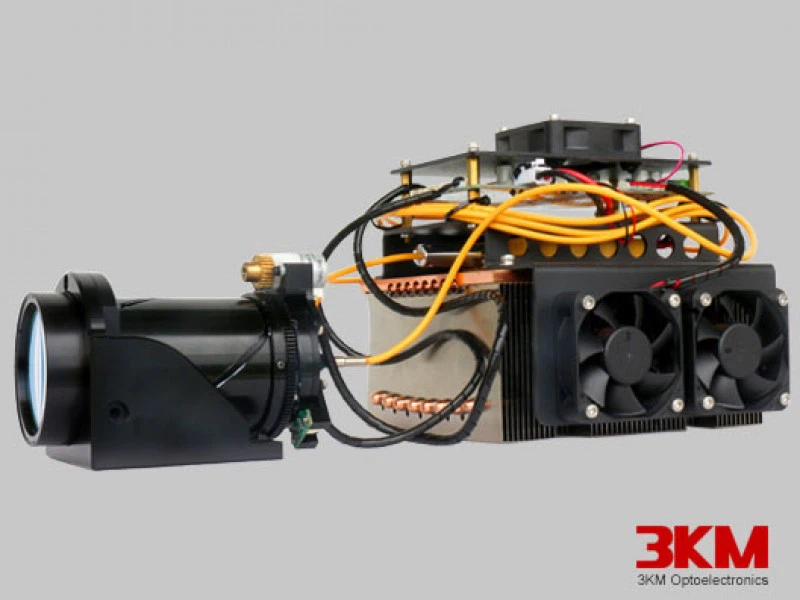

In RGB white laser lighting modules, the purity of the red, green, and blue lasers is crucial for a high CRI. High - quality semiconductor materials can produce lasers with a narrow spectral width and high color purity. When these pure - colored lasers are combined, they can accurately reproduce a wide range of colors, resulting in a high CRI. On the other hand, if the materials are of poor quality, the lasers may have a broader spectral width, which means that the colors are less pure. This can cause color distortion when illuminating objects, leading to a lower CRI.
For white laser lighting modules that use phosphors, the composition and quality of the phosphor materials are key. A well - designed and high - quality phosphor blend can cover a wide range of the visible spectrum, enabling the module to render colors more accurately. Low - quality phosphors may have gaps in the spectral coverage, resulting in certain colors being poorly represented and a lower CRI value.
3. Lifespan and Reliability
The lifespan and reliability of a white laser lighting module are also heavily influenced by the quality of materials. Laser diodes are the heart of the module, and their longevity is directly related to the materials they are made of. High - quality semiconductor materials have better thermal and electrical properties. They can withstand higher operating temperatures and electrical stresses without significant degradation.
In addition to the laser diodes, the packaging materials used in the white laser lighting module are also important. The packaging serves to protect the delicate components from environmental factors such as moisture, dust, and mechanical shock. High - quality packaging materials, such as hermetically sealed ceramic packages, can provide a stable and protective environment for the laser diodes and other components. This helps to prevent premature failure and extends the overall lifespan of the module.
Conversely, low - quality materials can lead to a shorter lifespan. For example, if the bonding materials used to attach the laser diodes to the substrate are of poor quality, they may degrade over time due to thermal cycling. This can cause the laser diodes to become loose or develop poor electrical connections, leading to a decrease in performance or even complete failure of the module.
4. Beam Quality
The quality of the light beam produced by a white laser lighting module is another aspect affected by material quality. In a laser system, the optical materials used in the lenses and mirrors play a vital role in shaping and directing the laser beam. High - quality optical materials have a high refractive index uniformity and low optical absorption.
These properties allow the lenses and mirrors to focus and direct the laser beam with high precision. For example, in a white laser lighting module used for long - distance illumination, a high - quality lens can focus the laser beam into a narrow, well - defined spot, maximizing the illumination distance and intensity. Low - quality optical materials may have refractive index variations, which can cause the laser beam to diverge or scatter. This results in a less concentrated and less effective beam, reducing the overall performance of the lighting module.
5. Thermal Management
Heat is a significant issue in white laser lighting modules, as excessive heat can degrade the performance and lifespan of the components. The materials used for thermal management are crucial in addressing this problem. High - quality heat - sink materials, such as copper or aluminum alloys with high thermal conductivity, can efficiently transfer heat away from the laser diodes and other heat - generating components.
Good thermal interface materials are also essential. These materials fill the gaps between the heat - generating components and the heat sink, ensuring efficient heat transfer. Low - quality thermal interface materials may have poor thermal conductivity or may dry out over time, leading to increased thermal resistance. This can cause the temperature of the components to rise, which in turn can reduce the efficiency of the laser diodes and shorten their lifespan.
In conclusion, the quality of materials used in a white laser lighting module has a far - reaching impact on its performance, including light output, color rendering, lifespan, beam quality, and thermal management. At our company, we are committed to using only the highest - quality materials in the production of our White Laser Lighting Module and RGB White Laser Lighting Module. We believe that by using top - notch materials, we can provide our customers with lighting solutions that offer superior performance and reliability.
If you are interested in learning more about our white laser lighting modules or are considering a purchase, I encourage you to reach out to us. We would be more than happy to discuss your specific requirements and help you choose the most suitable product for your needs. Our team of experts is always available to provide technical support and guidance throughout the procurement process.
References
- Principles of Semiconductor Lasers by Peter Zory
- Color Science: Concepts and Methods, Quantitative Data and Formulae by G. Wyszecki and W. S. Stiles
- Thermal Management of Electronic Systems by Avram Bar - Cohen and Ali Boriskin