
Hey there! I'm a supplier of White Laser Lighting Module, and I often get asked this question: Does a white laser lighting module emit UV or IR radiation? Let's dive into this topic and clear up any confusion.
First off, let's understand what we're dealing with. A white laser lighting module is a pretty cool piece of tech. It's designed to produce white light, which is super useful in a bunch of applications, from stage lighting to automotive headlights. But when it comes to UV (ultraviolet) and IR (infrared) radiation, things get a bit more complicated.
How White Laser Lighting Modules Work
To figure out if they emit UV or IR, we need to know how these modules make white light. There are a few ways to do this, but one common method is by combining red, green, and blue (RGB) lasers. That's where our RGB White Laser Lighting Module comes in.
In an RGB white laser lighting module, each laser emits light at a specific wavelength. The red laser typically emits light around 630 - 660 nanometers (nm), the green around 510 - 540 nm, and the blue around 440 - 470 nm. When these three colors are mixed together in the right proportions, our eyes perceive the result as white light.
UV Radiation
UV radiation has wavelengths shorter than visible light, typically ranging from 10 - 400 nm. So, does a white laser lighting module emit UV? Well, it depends on the design and quality of the module.
In a well - designed RGB white laser lighting module, the lasers are carefully selected to emit light only in the visible spectrum. The red, green, and blue lasers are engineered to have very narrow emission spectra, which means they don't spill over into the UV range. However, in some lower - quality modules or those with manufacturing defects, there could be a small amount of UV leakage.
For example, if the blue laser has a wider emission spectrum than it should, it might emit a tiny bit of light in the UV range just below 400 nm. But this is usually a very rare occurrence and can be minimized through proper quality control during the manufacturing process.
Another factor to consider is the materials used in the module. Some of the optical components, like lenses and filters, can also play a role. If these components are not properly coated or made from the right materials, they might not block all potential UV emissions effectively. But again, in a high - quality White Laser Lighting Module, these components are designed to prevent any significant UV leakage.
IR Radiation
IR radiation has wavelengths longer than visible light, usually from 700 nm to 1 mm. Similar to UV, whether a white laser lighting module emits IR depends on several factors.
In an RGB white laser lighting module, the red laser is the closest to the IR range. But the wavelengths of the red lasers used in these modules are well within the visible spectrum and don't typically reach into the IR range. However, there are other sources of potential IR emissions within the module.
One source could be the heat generated by the lasers. Lasers produce heat as a by - product of their operation, and this heat can cause the surrounding components to emit IR radiation. For example, the laser diodes and the heat sinks can emit IR radiation due to their temperature. But this is more of a thermal IR emission rather than a direct result of the laser light production.
Also, in some cases, if the electrical components in the module are not properly shielded, they might emit a small amount of IR radiation. But just like with UV, proper design and shielding can significantly reduce these emissions.
Safety Standards
To ensure the safety of users, there are strict safety standards in place for laser products, including white laser lighting modules. These standards, such as those set by the International Electrotechnical Commission (IEC) and the US Food and Drug Administration (FDA), specify limits for UV and IR emissions.
Manufacturers of white laser lighting modules are required to test their products to make sure they comply with these standards. For example, they need to measure the UV and IR emissions of the module and ensure that they are below the maximum allowable levels. This helps to protect users from potential harm caused by excessive UV or IR exposure.
Real - World Applications
In real - world applications, the risk of UV or IR exposure from a white laser lighting module is generally very low. For stage lighting, where these modules are often used, the lights are usually installed at a distance from the audience. Even if there were a tiny amount of UV or IR emission, the intensity would be so low by the time it reaches the people in the audience that it wouldn't pose a significant risk.
In automotive headlights, the lighting modules are designed to direct the light forward onto the road. The UV and IR emissions, if any, are directed away from the driver and pedestrians, further reducing the risk of exposure.
Testing and Verification
As a supplier, we take the issue of UV and IR emissions very seriously. We test each White Laser Lighting Module using specialized equipment to measure the UV and IR emissions. This includes using spectrometers, which can accurately measure the wavelengths and intensities of the light emitted by the module.
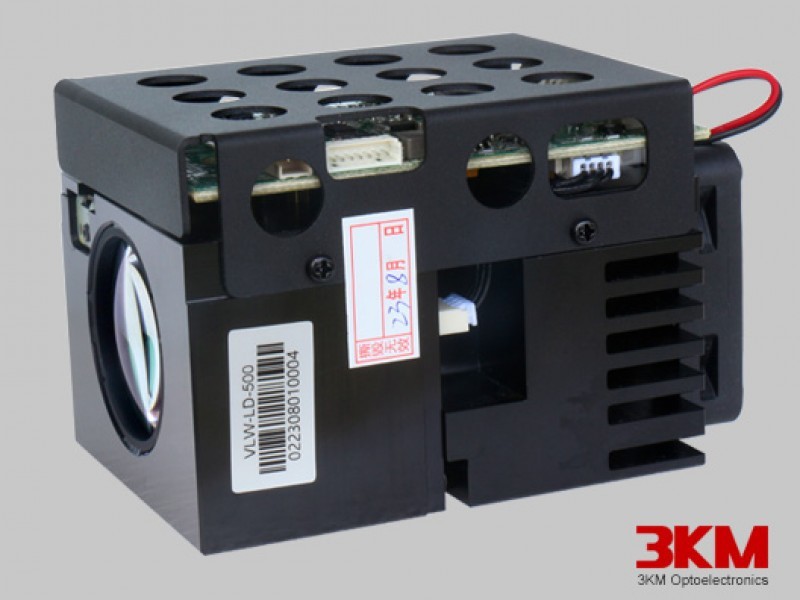

We also work closely with our manufacturing partners to ensure that the production process is of the highest quality. This involves strict quality control at every step, from the selection of the lasers to the assembly of the module. By doing so, we can guarantee that our products meet or exceed the safety standards for UV and IR emissions.
Conclusion
In general, a well - designed and properly manufactured white laser lighting module, like our RGB White Laser Lighting Module, emits very little to no UV or IR radiation. The risk of exposure to these potentially harmful radiations is minimal, especially when compared to other sources like the sun or some traditional lighting sources.
If you're in the market for a high - quality white laser lighting module and are concerned about UV or IR emissions, you can rest assured that our products are safe and reliable. We're committed to providing the best lighting solutions with the highest safety standards.
If you're interested in purchasing our white laser lighting modules or have any questions about our products, feel free to reach out. We're here to help you with all your lighting needs and can provide you with more detailed information about our products' specifications and safety features.
References
- Hecht, Jeff. "Understanding Lasers: An Entry - Level Guide." 2005.
- Saleh, Bahaa E. A., and Teich, Malvin Carl. "Fundamentals of Photonics." 2007.