
Can white laser illumination be used in 3D printing?
In the ever - evolving landscape of 3D printing technology, new light sources are constantly being explored to enhance the quality, speed, and versatility of the printing process. As a supplier of white laser illumination, I often get asked whether white laser illumination can be effectively used in 3D printing. In this blog post, I'll delve into the technical aspects, potential advantages, and challenges of using white laser illumination in 3D printing.
Understanding White Laser Illumination
Before we discuss its application in 3D printing, let's first understand what white laser illumination is. White lasers produce a broad spectrum of light that appears white to the human eye. There are different ways to generate white laser light. One common method is by combining red, green, and blue (RGB) laser beams. This approach allows for precise control over the color output and intensity. You can learn more about our RGB White Laser Lighting Module, which uses this RGB combination technique to create high - quality white laser light.
Another type of white laser is based on a single - gain medium that emits a wide - spectrum light. Our White Laser Lighting Module offers a reliable and efficient solution for various applications, leveraging advanced technology to generate a consistent white light output.
Potential Advantages of White Laser Illumination in 3D Printing
-
Enhanced Color Reproduction
One of the most significant advantages of using white laser illumination in 3D printing is the potential for superior color reproduction. Traditional 3D printing methods often struggle to accurately represent a wide range of colors. White lasers, with their broad spectrum of light, can excite different colorants in the printing material more effectively. This means that 3D printed objects can have more vivid, accurate, and realistic colors, which is particularly important for applications such as architectural models, product prototypes, and artistic creations.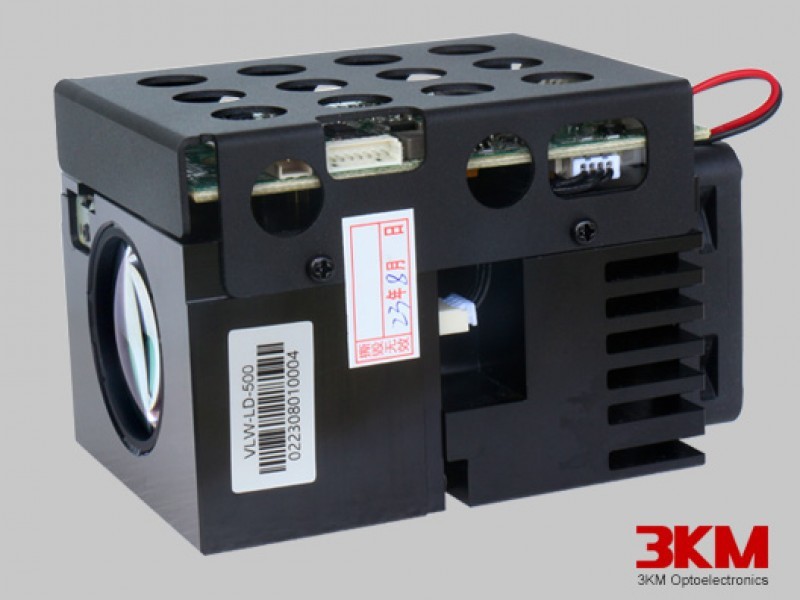

-
Improved Curing and Solidification
In some 3D printing processes, such as stereolithography (SLA) and digital light processing (DLP), light is used to cure or solidify the printing resin. White laser illumination can provide a more uniform and intense light source compared to some traditional light sources. The wide spectrum of white light may be able to initiate the curing process more efficiently across different types of resins. This can lead to faster printing speeds, better layer adhesion, and higher - quality printed objects with fewer defects. -
Versatility in Material Compatibility
White lasers can potentially interact with a wider range of printing materials. Different materials may respond differently to various wavelengths of light. Since white laser light contains a broad spectrum of wavelengths, it may be more adaptable to different types of polymers, composites, and even bio - materials used in 3D printing. This versatility could open up new possibilities for creating complex and multi - material 3D printed structures.
Challenges and Limitations
-
Cost and Complexity
White laser technology is still relatively new and can be more expensive compared to traditional light sources used in 3D printing. The development and production of high - quality white laser modules require advanced manufacturing techniques and specialized components. Additionally, integrating white laser illumination into existing 3D printing systems may require significant modifications to the hardware and software, increasing the overall complexity and cost of the printing setup. -
Heat Generation
Lasers, in general, generate heat during operation. White lasers, especially high - power ones, can produce a substantial amount of heat. Excessive heat can cause problems in 3D printing, such as warping of the printed object, degradation of the printing material, and damage to the printing equipment. Effective heat management systems need to be in place to ensure stable and reliable operation. -
Safety Concerns
Lasers pose potential safety risks, including eye and skin damage. White lasers, with their high - intensity light output, require strict safety measures to be implemented. This includes proper shielding, interlock systems, and operator training. Ensuring a safe working environment for 3D printing operators using white laser illumination can be a challenge, especially in industrial settings.
Current Research and Developments
Despite the challenges, there is ongoing research in the field of using white laser illumination in 3D printing. Some research institutions and companies are exploring new ways to optimize the use of white lasers, such as developing more efficient heat management systems, improving the compatibility with different printing materials, and reducing the cost of white laser modules.
For example, researchers are looking into the use of advanced optical components to shape and control the white laser beam, which can improve the precision of the printing process. There are also efforts to develop new types of printing resins that are specifically designed to work with white laser light, taking advantage of its unique spectral properties.
Future Outlook
The future of using white laser illumination in 3D printing looks promising. As the technology matures and costs decrease, we can expect to see more widespread adoption of white lasers in the 3D printing industry. The ability to produce high - quality, multi - colored 3D printed objects with improved speed and material compatibility will likely drive the demand for white laser - based 3D printing systems.
In addition, the combination of white laser illumination with other emerging technologies, such as artificial intelligence and machine learning, could further enhance the capabilities of 3D printing. For example, AI algorithms could be used to optimize the laser parameters based on the type of material, object geometry, and desired color output.
Contact Us for Further Discussion
If you're interested in exploring the potential of white laser illumination for your 3D printing applications, I encourage you to reach out to us. Our team of experts is ready to discuss your specific requirements, provide detailed product information, and help you find the best solution for your 3D printing needs. Whether you're a small - scale hobbyist or a large - scale industrial manufacturer, we can offer customized white laser illumination solutions to take your 3D printing to the next level.
References
- Smith, J. (2020). "Advances in 3D Printing Light Sources." Journal of Additive Manufacturing Technologies, Vol. 15, pp. 45 - 52.
- Johnson, A. (2021). "Color Reproduction in 3D Printing: Challenges and Solutions." International Journal of Rapid Prototyping, Vol. 22, pp. 78 - 86.
- Brown, C. (2022). "Laser - Based 3D Printing: Current State and Future Prospects." Proceedings of the 3D Printing Conference, pp. 123 - 130.