
As a supplier of White Laser Lighting Modules, I often get asked about the diverse applications of our products. One question that has come up quite frequently is whether a white laser lighting module can be used in underwater lighting. In this blog post, I'll explore this topic in detail, delving into the technical aspects, advantages, challenges, and potential applications of using white laser lighting modules underwater.
Understanding White Laser Lighting Modules
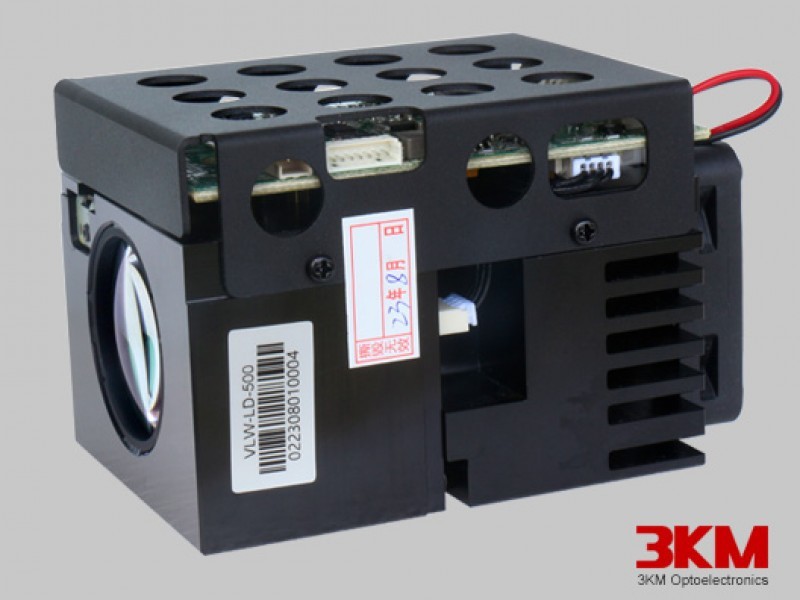
Before we dive into the underwater application, let's first understand what a white laser lighting module is. A White Laser Lighting Module is a device that uses laser technology to produce white light. Unlike traditional lighting sources such as incandescent bulbs or LEDs, lasers offer several unique properties that make them an interesting option for various lighting applications.
One of the key advantages of laser lighting is its high intensity and directionality. Laser beams can be focused over long distances without significant loss of intensity, making them ideal for applications where long-range illumination is required. Additionally, lasers can produce very pure and saturated colors, which can be beneficial for creating specific lighting effects.
In the case of white laser lighting modules, there are different ways to generate white light. One common method is to combine red, green, and blue (RGB) lasers in a RGB White Laser Lighting Module. By carefully controlling the intensity of each color component, it is possible to create a wide range of white light colors with different color temperatures and color rendering indices (CRI).
Advantages of Using White Laser Lighting Modules Underwater
Now, let's consider the potential advantages of using white laser lighting modules in underwater lighting applications:
High Intensity and Long-Range Illumination
Underwater environments can be very dark, especially at greater depths. The high intensity and long-range illumination capabilities of white laser lighting modules can be a significant advantage in these conditions. Laser beams can penetrate the water more effectively than traditional lighting sources, allowing for better visibility over longer distances. This can be particularly useful for underwater exploration, scientific research, and industrial applications such as underwater inspection and maintenance.
Color Rendering
Accurate color rendering is important in underwater lighting, especially for applications where the ability to distinguish between different colors is crucial. White laser lighting modules can offer excellent color rendering properties, allowing for a more natural and vivid representation of underwater objects and organisms. This can enhance the visual experience for divers and researchers, as well as improve the accuracy of underwater photography and videography.
Energy Efficiency
Compared to some traditional underwater lighting sources, white laser lighting modules can be more energy-efficient. Lasers convert a higher percentage of electrical energy into light energy, resulting in less wasted energy in the form of heat. This can be beneficial for underwater applications where power consumption is a concern, such as in remotely operated vehicles (ROVs) or autonomous underwater vehicles (AUVs) with limited battery capacity.
Compact Size
White laser lighting modules can be designed to be relatively compact, which is an advantage in underwater applications where space is often limited. The small size of these modules allows for easier integration into underwater equipment and vehicles, without adding excessive weight or bulk.
Challenges of Using White Laser Lighting Modules Underwater
While there are several potential advantages of using white laser lighting modules underwater, there are also some challenges that need to be addressed:
Water Absorption and Scattering
Water absorbs and scatters light, which can reduce the intensity and quality of the illumination provided by a white laser lighting module. Different wavelengths of light are absorbed and scattered to different extents by water, with blue and green light being absorbed less than red light. This means that the color balance of the white light may be affected as the laser beam travels through the water, and the overall intensity of the illumination may decrease. To overcome these challenges, it may be necessary to use specialized optics and filtering techniques to optimize the performance of the white laser lighting module underwater.
Heat Dissipation
Lasers generate heat during operation, and effective heat dissipation is crucial to ensure the reliability and performance of the white laser lighting module. Underwater, the heat transfer characteristics are different from those in air, and it can be more challenging to dissipate the heat generated by the laser. Specialized cooling systems may need to be designed to maintain the temperature of the laser within the acceptable range.
Safety Concerns
Laser light can be hazardous to the eyes and skin, and appropriate safety measures need to be taken when using white laser lighting modules underwater. This includes ensuring that the laser beam is properly contained and that operators are trained on the safe use of the equipment. Additionally, regulations and standards regarding the use of lasers in underwater environments need to be followed to ensure compliance and safety.
Potential Applications of White Laser Lighting Modules Underwater
Despite the challenges, there are several potential applications of white laser lighting modules in underwater environments:
Underwater Exploration and Research
White laser lighting modules can provide high-intensity, long-range illumination for underwater exploration and research. They can be used to illuminate deep-sea habitats, shipwrecks, and other underwater features, allowing researchers to observe and study these environments in greater detail. The excellent color rendering properties of white laser lighting can also enhance the accuracy of scientific observations and data collection.
Underwater Photography and Videography
For underwater photographers and videographers, white laser lighting modules can offer a powerful and versatile lighting solution. The high intensity and accurate color rendering of the white light can help to capture stunning images and videos of underwater life and landscapes. The ability to focus the laser beam can also be used to create interesting lighting effects and highlight specific subjects.
Underwater Inspection and Maintenance
In industrial applications such as underwater inspection and maintenance, white laser lighting modules can provide reliable and efficient illumination. They can be used to inspect pipelines, offshore structures, and other underwater infrastructure, allowing for the detection of defects and damage. The long-range illumination capabilities of the laser can also be useful for inspecting large areas quickly and accurately.
Underwater Diving
White laser lighting modules can enhance the safety and enjoyment of underwater diving. They can provide bright and clear illumination, allowing divers to see more clearly in dark or murky waters. The long-range illumination can also help divers to navigate and avoid obstacles. Additionally, the accurate color rendering can make the underwater experience more visually appealing.
Conclusion
In conclusion, while there are some challenges to overcome, white laser lighting modules have the potential to be used effectively in underwater lighting applications. Their high intensity, long-range illumination, excellent color rendering, energy efficiency, and compact size make them an attractive option for a variety of underwater uses, including exploration, research, photography, inspection, and diving.
As a supplier of White Laser Lighting Modules, we are committed to developing and improving our products to meet the specific needs of underwater applications. We are constantly working on addressing the challenges associated with water absorption, heat dissipation, and safety, and we are exploring new technologies and designs to enhance the performance of our white laser lighting modules underwater.
If you are interested in learning more about our white laser lighting modules or discussing potential applications in underwater lighting, please feel free to contact us. We would be happy to provide you with more information and assist you in finding the right lighting solution for your needs.

References
- Smith, J. (2018). Laser Lighting Technology: Principles and Applications. New York: Wiley.
- Johnson, M. (2019). Underwater Lighting: Design and Applications. London: Elsevier.
- Brown, S. (2020). Advances in White Laser Lighting. Journal of Lighting Research, 15(2), 123-135.