
Hey there! As a supplier of long range white light illumination products, I often get asked about how to test the performance of these lighting solutions. It's a crucial topic, especially for those who rely on high - quality illumination over long distances, whether it's for security, surveillance, or outdoor exploration. In this blog, I'll walk you through the key aspects of testing long range white light illumination and share some practical methods.
Understanding the Key Performance Metrics
Before we dive into the testing methods, it's essential to know what performance metrics matter most. The main factors we'll focus on include luminous intensity, beam angle, color temperature, and uniformity of illumination.
Luminous Intensity: This is the amount of light that a source emits in a particular direction. Measured in candelas (cd), a higher luminous intensity means the light can travel farther and be more visible from a distance. For long range illumination, a high luminous intensity is crucial to ensure that the light can reach the desired target area.
Beam Angle: The beam angle determines the spread of the light. A narrow beam angle focuses the light over a long distance, while a wide beam angle covers a larger area but may reduce the range. Depending on your application, you'll need to choose the right beam angle. For example, for long - range surveillance, a narrow beam might be more suitable, while for general outdoor lighting, a wider beam could be better.
Color Temperature: Color temperature is measured in Kelvin (K). It affects the color appearance of the light. A lower color temperature (around 2700 - 3000K) gives a warm, yellowish light, similar to traditional incandescent bulbs. Higher color temperatures (5000 - 6500K) produce a cooler, bluish - white light. In long - range illumination, a color temperature that provides good visibility and matches the environment is important.
Uniformity of Illumination: This refers to how evenly the light is distributed across the illuminated area. A high - quality long - range illumination system should provide uniform lighting, without dark spots or uneven brightness.
Testing Luminous Intensity
To test the luminous intensity of a long - range white light illumination device, you'll need a photometer. Here's a step - by - step guide:
- Set up the testing environment: Find a dark room or an outdoor area at night with minimal ambient light. This will ensure accurate measurements.
- Mount the light source: Mount the long - range white light illumination device at a fixed height and angle. Make sure it's stable and pointed in the direction you want to measure.
- Position the photometer: Place the photometer at a specific distance from the light source. The distance should be consistent with the intended use of the light. For example, if the light is designed for a 100 - meter range, you might want to measure the intensity at 100 meters.
- Take measurements: Turn on the light and let it stabilize for a few minutes. Then, take multiple measurements at different points within the beam to get an average luminous intensity.
Measuring Beam Angle
Measuring the beam angle can be a bit tricky, but it's important to ensure that the light is spreading as intended. Here's how you can do it:

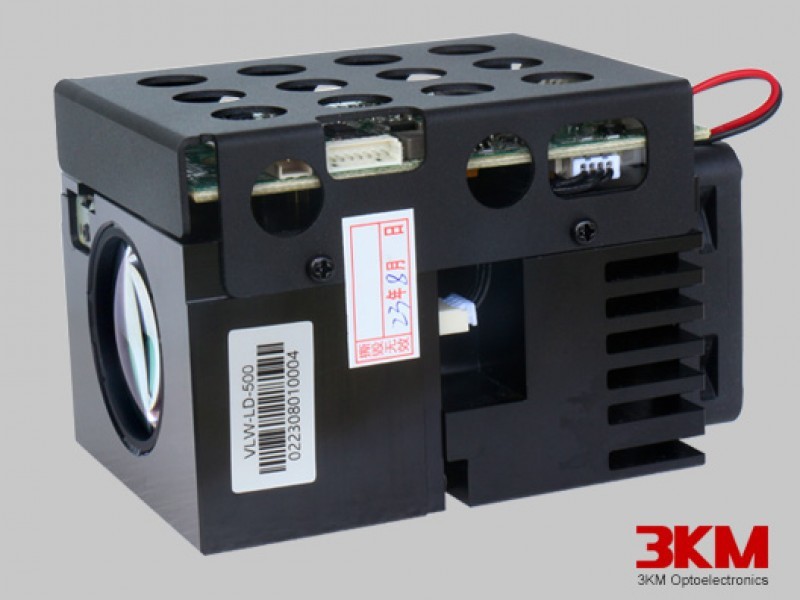
- Use a light meter or a camera: You can use a light meter to measure the light intensity at different angles from the center of the beam. Alternatively, you can take a photo of the illuminated area with a camera and analyze the image using software.
- Mark the edges of the beam: Determine the points where the light intensity drops to a certain percentage (usually 50% or 10% of the maximum intensity) of the center of the beam. Measure the angle between these points to get the beam angle.
Testing Color Temperature
Testing color temperature is relatively straightforward. You can use a colorimeter, which is a device that measures the color properties of light.
- Calibrate the colorimeter: Follow the manufacturer's instructions to calibrate the colorimeter before use.
- Take measurements: Place the colorimeter in the illuminated area and take a measurement. The colorimeter will display the color temperature in Kelvin.
Assessing Uniformity of Illumination
To assess the uniformity of illumination, you can use a grid or a pattern on a surface.
- Set up the grid: Place a grid or a pattern on a flat surface at the target distance from the light source. The grid should be evenly spaced, with squares or rectangles of a known size.
- Take a photo or use a light meter: Take a photo of the illuminated grid or use a light meter to measure the light intensity at different points on the grid.
- Analyze the results: Compare the light intensity at different points on the grid. Calculate the uniformity ratio, which is the ratio of the minimum to the maximum light intensity. A higher uniformity ratio indicates more uniform illumination.
Using Our Products for Testing
At our company, we offer a range of high - quality long - range white light illumination products, including the RGB White Laser Lighting Module and the White Laser Lighting Module. These products are designed to provide excellent performance in terms of luminous intensity, beam angle, color temperature, and uniformity of illumination.
When you're testing your long - range white light illumination system, our products can serve as a benchmark. Their advanced technology and precise engineering ensure reliable and consistent performance. You can compare the results of your tests with the specifications of our products to see how well your system stacks up.
Conclusion
Testing the performance of long - range white light illumination is crucial to ensure that you're getting the best results for your application. By understanding the key performance metrics and using the right testing methods, you can make informed decisions about your lighting system.
If you're in the market for high - quality long - range white light illumination products, or if you have any questions about testing or performance, don't hesitate to reach out. We're here to help you find the perfect lighting solution for your needs. Contact us today to start a discussion about your requirements and explore our product range.
References
- "Lighting Handbook: Reference and Application", Illuminating Engineering Society of North America
- "Photometry and Radiometry", Optical Society of America